
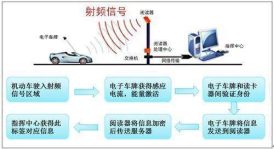
RFID technology has become an important means of building “harmonious transportation”
 chrispeng
RFID Technology in Transportation: Building Harmonious Traffic Systems with Smart Vehicle Identification
The rapid increase in vehicle ownership has created significant management and control challenges for parking facilities, gated communities, corporate campuses, and municipal traffic systems worldwide. Traditional paper-based vehicle permits, while simple to produce, fail to deliver the intelligent, data-driven collection and enforcement capabilities that modern operations require. RFID (Radio Frequency Identification) technology has emerged as a cornerstone for building what industry experts call “harmonious transportation”—systems that balance efficiency, security, and user convenience through automated vehicle identification.
By binding a unique RFID electronic tag to each vehicle and recording every entry and exit in real time within a centralized database, operators gain unprecedented visibility and control. RFID enables non-contact, long-range identification of moving targets, allowing systems to automate access decisions, enforce permissions, and collect traffic data without requiring drivers to stop or roll down windows.
The Core Mechanism: How RFID Enables Smart Vehicle Identification
RFID-based vehicle identification relies on three fundamental components: the RFID tag (attached to the vehicle), the RFID reader (installed at entry/exit points), and the backend management system. When a vehicle approaches a gated entry, the reader emits a radio signal that energizes the tag, which then transmits its unique ID and any stored data back to the reader. The backend system instantly validates the ID against the database and triggers the appropriate action—opening a gate, logging the event, or raising an alert.
Non-Contact Operation at Speed
Unlike barcode or QR code systems that require precise alignment and proximity, RFID readers can identify tags from several meters away, even when the vehicle is moving at moderate speeds. This makes RFID ideal for high-traffic environments where stopping every vehicle would create bottlenecks. The read range is controllable, allowing system designers to fine-tune the detection zone for each specific lane configuration.
Data-Rich Identification
RFID tags carry not only a unique ID but also writable memory. Vehicle-specific data—such as license plate number, driver credentials, access permissions, and validity periods—can be encrypted and stored directly on the tag. This enables offline validation and reduces dependence on continuous network connectivity, a critical advantage for remote or backup gate operations.
Security and Anti-Fraud Capabilities
One of the primary reasons transportation and security professionals choose RFID over visual verification or paper permits is the technology’s inherent resistance to fraud, theft, and misuse.
Anti-Counterfeiting Through Unique and Immutable IDs
Every RFID tag manufactured worldwide carries a globally unique, factory-programmed ID that cannot be altered or duplicated. This hardware-level uniqueness makes it virtually impossible to counterfeit an RFID-based vehicle permit. Additionally, operators can encrypt license and vehicle data into the tag’s writable memory, adding a second layer of authentication that further deters forgery.
Anti-Borrowing: Three-Way Unification
RFID systems support the unification of permit, vehicle, and driver credentials. By cross-referencing the tag ID with vehicle plate information and driver identity in the backend database, the system can detect when a permit has been transferred to an unauthorized vehicle. This prevents the common “permit borrowing” loophole that plagues paper-based and sticker-based access control systems. Advanced implementations achieve full three-way matching: tag, vehicle, and driver.
Anti-Theft and Lost Tag Invalidation
If a vehicle tag is lost or stolen, the operator can immediately mark it as invalid in the system. Any subsequent attempt to use that tag at a reader will trigger an alert, helping security personnel intercept unauthorized access attempts. This real-time revocation capability is critical for maintaining the integrity of access control systems in high-security environments.
Anti-Disassembly: Tamper-Evident Installation
Modern RFID tags designed for vehicle applications include anti-disassembly mechanisms. Once installed—typically on the windshield with a specialized adhesive—the tag’s internal antenna structure is physically damaged if removal is attempted, rendering the tag permanently inoperable. This ensures a one-to-one correspondence between the tag and the vehicle, preventing re-use on another vehicle.
Frequency Band Selection: UHF vs. Active RFID
The vehicle identification industry primarily uses three frequency bands: 5.8 GHz, 2.45 GHz, and 915 MHz (UHF). Two major technology camps have emerged: active 2.45 GHz tags and passive 915 MHz UHF tags.
915 MHz UHF Passive Tags
Passive UHF tags (operating at 860–960 MHz) have become the dominant choice for vehicle access applications. These tags do not require an internal battery; they draw power from the reader’s interrogation signal. Key advantages include:
- Extended read range: Easily achieves 10 meters or more, depending on reader configuration, with controllable read zones.
- Low cost: Passive tags are significantly less expensive than active tags, making large-scale deployments economically feasible.
- Thin, flexible form factors: Custom RFID stickers can be designed as slim, unobtrusive labels that adhere directly to the windshield.
- Long service life: With no battery to deplete, passive tags can last 10+ years under normal conditions.
- Integration flexibility: UHF readers can share infrastructure with other systems, such as inventory tracking or logistics portals.
One consideration with UHF tags is that metallized or ceramic window films can reduce read range. However, proper tag placement—typically in the upper corner of the windshield—and reader power tuning can compensate for this effect without compromising normal traffic flow.
2.45 GHz Active Tags
Active tags contain an internal battery that powers the tag’s transmitter, enabling longer read ranges and additional features such as real-time location tracking. These tags are well-suited for non-motorized vehicle management (e.g., electric bicycles, scooters) and applications requiring positioning data. However, the battery has a finite lifespan of 2–3 years, requiring periodic replacement or tag replacement. Active tags also carry a higher unit cost, which can be a limiting factor for large-scale vehicle deployments.
Real-World Applications and Deployment Scenarios
RFID-based vehicle identification is deployed across a broad range of environments, each with unique requirements:
Gated Communities and Residential Access
Residential estates use passive UHF tags on resident vehicles to enable hands-free entry. The system logs all comings and goings, providing security teams with an audit trail. Lost tags can be instantly deactivated, preventing unauthorized use. Some systems extend to visitor management by issuing temporary tags at the guardhouse.
Corporate and Government Campus Parking
Large employers and government facilities manage thousands of parking spaces using RFID to enforce permit-based parking. Tags are assigned to employees or vehicles, and readers at entrance gates and parking zone barriers validate access in real time. Integration with HR systems allows automatic deactivation when an employee leaves the organization.
Toll Collection and Traffic Management
RFID is a proven technology for electronic toll collection (ETC), enabling vehicles to pass through toll plazas at highway speeds without stopping. Dedicated short-range communication (DSRC) readers at toll points identify tags, and the corresponding fee is deducted from a prepaid account or billed to the vehicle owner. This reduces congestion, lowers fuel consumption, and improves air quality.
Logistics and Fleet Management
Distribution centers and freight terminals use RFID to track truck arrivals and departures, automate dock door assignments, and verify trailer identification. Combined with telematics, RFID provides a reliable data capture point for supply chain visibility. For more on how RFID supports asset tracking in logistics contexts, see the guide on RFID tags on clothes as an example of the same core technology applied to garment lifecycle management.
Deployment Considerations for System Integrators
Designing and deploying an RFID-based vehicle identification system requires careful planning across several dimensions:
- Reader Placement: Antennas should be positioned to create a consistent read zone that captures tags as vehicles approach, without reading tags in adjacent lanes. Proper antenna polarization and beamwidth selection are critical.
- Tag Selection: Choose tags with appropriate read range, form factor, and environmental durability. Windshield-mounted tags are common, but license plate-mounted or headlight-mounted tags may be preferred for certain applications.
- Database and Software Integration: The backend system must support real-time lookup, access rule enforcement, logging, and reporting. APIs should allow integration with existing gate controllers, CCTV, and visitor management systems.
- Environmental Factors: Outdoor readers must be weather-resistant. Metal structures, concrete barriers, and overhead lighting can affect RF propagation; a site survey is recommended.
- Redundancy and Failover: For critical access points, consider redundant readers and a backup power source. Offline mode with local tag validation ensures operation during network outages.
Product Selection Guidance
When selecting RFID components for vehicle identification, focus on the following criteria:
| Component | Key Specifications | Recommendation |
|---|---|---|
| RFID Tag | Frequency (UHF 860–960 MHz), read range, form factor, anti-disassembly | Choose a passive UHF tag with windshield-mount form factor for cost-effective, long-life operation |
| RFID Reader | Output power (up to 30 dBm), antenna ports, protocol (EPC Gen2), IP rating | Industrial-grade reader with at least 4 antenna ports for multi-lane coverage |
| Antenna | Gain (6–12 dBi), polarization (linear or circular), beam pattern | Circular polarization for reliable tag orientation tolerance; linear for maximum range |
| Middleware | Data filtering, API support, event management | Platform that supports real-time integration with access control and security systems |
Industry Insights and Future Trends
The RFID transportation market continues to evolve, driven by urbanization, smart city initiatives, and the growing demand for frictionless mobility. Several trends are shaping the next generation of vehicle identification systems:
- Multi-Technology Fusion: Combining RFID with automatic license plate recognition (ALPR) and video analytics provides redundant verification and richer data for traffic management.
- Edge Computing: Processing tag data directly on the reader or a local gateway reduces latency and enables real-time decision-making even without cloud connectivity.
- Blockchain for Trust: Immutable ledgers are being explored to securely record vehicle identity and access events, creating tamper-proof audit trails for compliance and liability purposes.
- Interoperability Standards: As more cities deploy RFID-based toll and access systems, standards such as ISO 18000-6C and EPC Gen2 ensure that tags from different manufacturers can work with readers from different suppliers.
- Miniaturization and Smart Labels: Advances in chip design are producing tags that are smaller, more cost-effective, and easier to embed, expanding the range of vehicles—from cars to bicycles—that can be identified. For projects requiring comparison of NFC tag options, the detailed breakdown of NTAG213 vs NTAG215 illustrates important distinctions that also apply to certain vehicle identification use cases.
Frequently Asked Questions (FAQ)
- Q: What is the typical read range for a passive UHF tag on a vehicle?
A: Under normal conditions, a properly installed passive UHF tag can be read from 6 to 12 meters (20 to 40 feet) using a standard industrial reader. The range is controllable through reader power settings and antenna selection. - Q: Can RFID tags be removed and reused on another vehicle?
A: Many vehicle-grade RFID tags are designed with anti-disassembly features that permanently damage the antenna structure upon removal, making the tag inoperable and preventing reuse. - Q: How long does a passive RFID tag last on a vehicle?
A: Passive tags have no internal battery and can last 10 years or longer under typical environmental conditions. The adhesive and tag substrate material should be selected for UV and temperature resistance. - Q: Will a metallized windshield film affect RFID tag reading?
A: Yes, some metallized or ceramic films can attenuate the RF signal and reduce read range. Proper tag placement—often in a small “cutout” area or near the top edge of the windshield—can mitigate this effect. Active tags are less affected because they generate their own signal. - Q: Is RFID better than license plate recognition for vehicle access?
A: Both technologies have strengths. RFID works reliably in all lighting and weather conditions and does not require a clear line-of-sight to the license plate. License plate recognition (LPR) adds visual verification and can identify vehicles without tags. Many high-security installations use both technologies in tandem. - Q: What happens if the network connection to the database is lost?
A: Modern RFID readers support offline mode, where they can store recent tag data locally and perform basic validation against a cached whitelist. When connectivity is restored, the reader uploads all logged events to the central database. - Q: Can I use the same RFID reader for vehicle access and inventory tracking?
A: Yes, UHF RFID readers can support multiple applications. However, the antenna configuration and read zone optimization for vehicle access are typically different from those for warehouse portals. It is often more practical to dedicate readers per application unless the deployment is small. - Q: How do I choose between active and passive tags for a vehicle project?
A: For most vehicle access and tolling applications, passive UHF tags offer the best balance of cost, longevity, and performance. Choose active 2.45 GHz tags when real-time location tracking is required or when the vehicle’s construction makes passive tag reading unreliable.
Conclusion
RFID technology has proven itself as a powerful enabler of “harmonious transportation”—systems that deliver secure, efficient, and user-friendly vehicle identification at scale. From gated communities and corporate parking to national tolling networks, RFID provides a robust foundation for intelligent traffic management. By understanding the characteristics of different frequency bands, the security features of modern tags, and the deployment considerations unique to vehicle environments, system integrators and facility managers can design solutions that meet today’s demands while remaining adaptable for tomorrow’s innovations.
As the industry moves toward greater interoperability, edge intelligence, and multi-technology fusion, the role of RFID in transportation will only deepen. Working with an experienced RFID reader manufacturer ensures access to the technical expertise and quality components necessary to build a system that is reliable, scalable, and future-ready.