
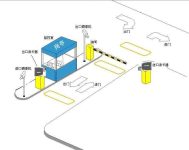
Parking lot adopts RFID intelligent management to improve work efficiency
 chrispeng
RFID Intelligent Parking Management: Enhancing Efficiency with Automated Vehicle Identification
Urban centers worldwide face growing challenges in vehicle management. Congestion at parking facilities, manual toll collection delays, and security vulnerabilities have driven the adoption of RFID-based intelligent parking systems. As a manufacturer of RFID solutions, we recognize that the shift from traditional parking management to automated, real-time identification systems is not merely a convenience—it is a operational necessity for modern infrastructure.
This article provides a manufacturer-level technical examination of how RFID reader manufacturer technologies enable intelligent parking lot management, the underlying principles of RFID-based vehicle identification, product selection criteria, and deployment best practices for facility managers and system integrators.
Understanding RFID Technology for Parking Management
Radio Frequency Identification (RFID) uses electromagnetic fields to automatically identify and track tags attached to objects. In parking environments, RFID electronic tags store vehicle-specific data, including license plate number, vehicle model, owner information, and access permissions. The system comprises three core components:
- RFID tags — mounted on vehicles (typically on the windshield or license plate)
- Fixed or handheld readers — installed at entry and exit points
- Backend management software — processes tag data and controls barrier gates
The RFID tag communicates with the reader via radio waves, enabling non-contact, high-speed identification without requiring the vehicle to stop. This eliminates the bottlenecks associated with manual card swiping or ticket-based systems.
Key Technical Characteristics
Modern RFID parking systems operate in the UHF band (860–960 MHz) or HF band (13.56 MHz), depending on the required read range and application environment. UHF systems typically offer read distances of up to 10 meters or more, making them ideal for high-speed vehicle entry and exit lanes. HF systems are often used for closer-range applications such as payment verification or pedestrian access.
Additional technical attributes include:
- Read speed: Up to 100 tags per second for UHF readers
- Anti-collision: Simultaneous reading of multiple tags in the read zone
- Data retention: Non-volatile memory ensures tag data integrity for 10+ years
- Environmental durability: Weather-resistant, UV-stable, and impact-resistant enclosures
Comparison: Traditional vs. RFID-Based Parking Systems
Traditional parking lot management systems rely on manual ticketing, proximity cards, or barcode scanners. These methods suffer from several inherent limitations that RFID technology directly addresses.
| Feature | Traditional System | RFID Intelligent System |
|---|---|---|
| Vehicle identification method | Manual card swipe or ticket | Automatic radio frequency reading |
| Entry/exit time per vehicle | 8–15 seconds | 1–3 seconds |
| Anti-counterfeiting capability | Low (cards can be cloned) | High (unique encrypted serial number) |
| Weather/light sensitivity | Affected by rain, snow, darkness | Unaffected (RF signal penetrates non-metals) |
| Labor requirement | Multiple attendants needed | Minimal supervision required |
| Data integration | Limited to local records | Cloud-based, real-time reporting |
The transition to RFID eliminates physical contact between the driver and the infrastructure, reducing wear and tear on hardware and minimizing the spread of contaminants—a consideration that gained prominence during the COVID-19 pandemic.
Real-World Applications of RFID Parking Systems
Commercial Parking Facilities
Large shopping malls, airports, and convention centers deploy UHF RFID systems to manage high-volume traffic. Vehicles equipped with tags experience seamless entry and exit, while temporary visitors receive disposable or reusable tags at entry kiosks. The system automatically calculates parking fees based on duration and applies discounts for registered members.
Residential Communities and Gated Complexes
Gated communities use RFID tags to authorize resident vehicles. The system logs each vehicle’s entry and exit times, providing security personnel with a complete audit trail. Unauthorized vehicles trigger real-time alerts. Integration with intercom systems allows visitor pre-authorization.
Corporate and Government Fleets
Organizations managing vehicle fleets install RFID Reader units at facility entrances to automatically record fleet movements. This data feeds into fleet management software for mileage tracking, fuel cost allocation, and maintenance scheduling.
Airport Parking and Rental Car Lots
Airports use RFID to manage long-term parking, employee parking, and rental car return areas. The system tracks vehicle dwell time and integrates with payment kiosks. Rental car companies tag their fleet and use RFID readers at exit gates to verify authorized departures.
Public Transportation Hubs
Bus terminals and train stations implement RFID parking to support commuter lots. Monthly pass holders receive windshield-mounted tags, enabling priority access and automated billing. The system reduces congestion during peak hours.
Deployment Considerations for RFID Parking Systems
Implementing an RFID parking management system requires careful planning across several dimensions. Below are the key deployment factors we recommend to our clients.
Reader Placement and Antenna Configuration
Readers must be positioned to create a controlled read zone at each entry and exit lane. Antenna polarization (linear vs. circular) affects read reliability. Circular-polarized antennas are preferred for vehicles approaching at varying angles. The read zone should be confined to a single lane to avoid cross-reads from adjacent lanes.
Tag Selection and Mounting
Tags designed for vehicle mounting must withstand direct sunlight, temperature extremes (-40°C to +85°C), and potential impacts from debris. Windshield-mounted tags offer consistent read performance, while license plate-mounted tags provide a more permanent attachment. Temporary tags for visitor vehicles should be easily removable and disposable.
Integration with Existing Infrastructure
Modern RFID systems integrate with barrier gates, LED signage, payment terminals, and license plate recognition cameras. Open API protocols (e.g., HTTP/HTTPS, MQTT) simplify integration with property management systems (PMS) and building management systems (BMS).
Redundancy and Failover
For mission-critical applications, redundant readers and network paths ensure continued operation during equipment failure. Local data buffering prevents transaction loss during network outages. Battery backup for gate controllers maintains functionality during power interruptions.
Data Privacy and Security
Vehicle identification data is sensitive. Encryption of tag data (AES-128 or higher) prevents unauthorized cloning. Network segmentation isolates the RFID system from public networks. Role-based access control restricts configuration changes to authorized personnel.
Product Selection Guidance for RFID Parking Systems
Choosing the right components for an RFID parking system depends on the specific operational requirements. Below is a decision framework based on our manufacturing experience.
Tag Selection Criteria
- Read range requirement: UHF tags for distances >3 meters; HF/NFC tags for close-range (<1 meter)
- Mounting surface: Windshield (on-glass tags) vs. license plate (metal-mount tags)
- Environmental exposure: Outdoor-rated tags with IP68 or IP69K protection
- Memory capacity: Basic identification (EPC only) vs. extended data storage (user memory bank)
- Reusability: Durable tags for permanent vehicles; disposable tags for temporary visitors
Reader Selection Criteria
- Read range: Fixed UHF readers (10–15 meters) vs. integrated reader-antennas (3–5 meters)
- Multi-tag handling: Anti-collision algorithms for high-density lanes
- Communication interface: Ethernet, RS-485, or Wi-Fi depending on site wiring
- Power supply: PoE (Power over Ethernet) for simplified installation
Software Platform Requirements
- Real-time vehicle tracking dashboard
- Automated billing and invoicing
- Reporting and analytics (occupancy rates, peak hours, revenue trends)
- Integration with third-party access control and payment systems
- Remote monitoring and firmware updates
Industry Insights: Broader RFID Applications
The same RFID technology that powers intelligent parking systems is deployed across multiple industries with similar efficiency gains. The versatility of rfid tags on clothes in retail inventory management, for example, demonstrates how RFID provides real-time asset visibility. In logistics, RFID tracks pallets and containers through supply chains. In manufacturing, it monitors tooling and work-in-progress.
Understanding the differences between tag types is critical for correct application selection. For instance, the choice between ntag213 vs ntag215 depends on memory requirements and security needs in NFC-based applications. In parking systems, where durability and read range are paramount, industrial-grade UHF tags are preferred over consumer NFC alternatives.
The trend toward integrated IoT ecosystems means that parking lot RFID systems increasingly serve as data nodes within smart city infrastructure. Real-time occupancy data feeds into traffic management systems, guiding drivers to available spaces and reducing congestion. This convergence of RFID, cloud computing, and mobile applications represents the next frontier in urban mobility.
Economic and Operational Benefits
Organizations that upgrade to RFID-based parking management report measurable improvements across key performance indicators:
- Labor cost reduction: 60–80% decrease in on-site staffing requirements
- Throughput increase: 3–4x more vehicles processed per lane per hour
- Revenue leakage reduction: Elimination of manual ticket fraud and errors
- Customer satisfaction: Reduced wait times and frictionless experience
- Security improvement: Real-time alerts for unauthorized vehicles
FAQ: RFID Intelligent Parking Management
Q1: What read range is needed for a typical parking lot entrance?
For standard passenger vehicles, a read range of 3–6 meters is sufficient. For trucks and buses with higher windshields, readers with 8–10 meter range ensure reliable detection.
Q2: Can RFID tags be reused for different vehicles?
Yes. Durable RFID tags can be removed and reprogrammed for new vehicles. However, windshield-mounted adhesive tags are typically single-use. Reusable tags are more cost-effective for fleet applications.
Q3: Does weather affect RFID performance in parking lots?
RFID systems are largely immune to rain, snow, fog, and dust. UHF signals can penetrate non-metallic materials. Heavy rain or snow may slightly reduce effective read range, but properly designed systems maintain reliable operation.
Q4: How does the system handle multiple vehicles approaching simultaneously?
UHF readers with anti-collision algorithms can read up to 100 tags per second. In multi-lane configurations, each lane is isolated using directional antennas and shielding to prevent cross-reads.
Q5: What happens if a vehicle’s RFID tag is damaged or lost?
The system should include a fallback method such as license plate recognition (LPR) or manual verification by security personnel. Replacement tags can be issued after identity verification.
Q6: How is payment handled for temporary visitors without RFID tags?
Visitors can obtain a temporary RFID tag at an entry kiosk or use an alternative payment method such as credit card, mobile app, or QR code. The system associates the payment with the vehicle’s entry record.
Q7: Can the RFID system integrate with existing access control and CCTV systems?
Yes. Most modern RFID parking systems support integration via standard protocols (ONVIF for cameras, Wiegand for access control panels, REST APIs for software platforms). This enables unified monitoring and incident investigation.
Q8: What is the typical lifespan of an RFID parking system?
With proper maintenance, hardware components (readers, antennas, controllers) last 7–10 years. RFID tags have a lifespan of 5–10 years depending on environmental exposure. Software platforms require updates every 2–3 years for security and feature enhancements.
Conclusion
RFID intelligent parking management represents a proven upgrade from traditional manual systems. The technology delivers measurable improvements in operational efficiency, security, and user experience. As a manufacturer, we emphasize the importance of selecting the correct RFID components—tags, readers, and software—for the specific deployment environment.
Organizations evaluating RFID parking solutions should prioritize system reliability, integration capability, and scalability. When properly designed and installed, an RFID parking system provides a rapid return on investment through labor savings, increased throughput, and reduced fraud.
For further guidance on selecting the right RFID tag for your parking application, or to discuss custom solutions with our engineering team, contact us directly. We manufacture a full range of RFID products designed for demanding vehicle management environments.