
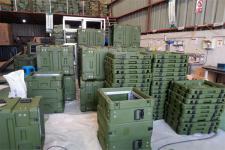
RFID technology helps the military’s strategic materials to achieve militarized management!
 chrispeng
 RFID Technology for Military Strategic Materials Management: A Comprehensive Guide from an RFID Manufacturer
In modern military operations, the efficient management of strategic materials—ranging from weapons and ammunition to office equipment and training gear—is critical for readiness and operational success. Radio Frequency Identification (RFID) technology has evolved into a mature, non-contact automatic identification solution capable of operating in the most demanding environments. As an RFID manufacturer specializing in durable, high-performance tags and systems, we have seen firsthand how RFID enables militarized management of assets. This article explores how RFID technology revolutionizes military material management, provides technical insights into deployment, and offers product selection guidance to help defense organizations achieve unparalleled visibility and control over their inventories.
Understanding Military Material Categories
Military organizations typically manage three primary categories of materials, each with distinct tracking and management requirements:
1. War Preparation Materials
These include guns, ammunition, combat vehicles, artillery, and other mission-critical assets. Management functions involve daily maintenance tracking, repair records, usage monitoring, and lifecycle management. Accurate, real-time data on these materials is essential for combat readiness.
2. Office Supplies
Items such as office computers, printers, networking equipment (routers, switches, servers), and furniture fall under this category. The system must capture supplier information, warranty details, maintenance history, and lifecycle status to ensure operational continuity.
3. Training Materials
Materials used during military or daily training—including training weapons, knives, uniforms, and electronic devices—require planned storage and real-time inventory visibility to prevent shortages or misplacements.
How RFID Enables Militarized Material Management
RFID technology provides a foundation for automated, tamper-resistant tracking. In a typical military warehouse, RFID access control systems and RFID access channels are deployed at entry and exit points. Each war preparation material is embedded with an RFID tag that stores unique identification data and relevant asset information. Personnel authorized to handle materials carry RFID cards containing their identity credentials.
When a soldier or officer enters the warehouse to extract strategic materials, the RFID channel automatically reads both the person’s card and the tags on the extracted items. The system logs the borrower’s identity, material IDs, and timestamp. Similarly, when materials are returned, the channel records the return event, enabling accurate tracking of material location and status. Handheld RFID readers are used by material managers for periodic inspections and condition assessments, linking maintenance records directly to the system.
Real-World Application: Lifecycle and Maintenance Management
Beyond simple check-in/check-out, RFID supports lifecycle management. Each tag can store manufacturing date, warranty expiry, last maintenance date, and usage count. The system automatically triggers maintenance reminders when thresholds are met. For office supplies, RFID tags are affixed to every asset, and managers use handheld terminals to collect inventory data efficiently, reducing manual errors and saving time.
Technical Considerations for RFID Deployment in Military Environments
Military warehouses and field environments present unique challenges: extreme temperatures, moisture, physical impact, and metal interference. Selecting the right tag type and frequency is crucial.
Frequency Selection: UHF vs. HF vs. LF
- UHF (860–960 MHz) offers long read range (up to 10m) and high-speed reading, ideal for pallet-level tracking and access channels.
- HF (13.56 MHz) provides better performance near metals and liquids, suitable for tagging handguns, ammunition boxes, and metal equipment.
- LF (125 kHz) is robust for harsh environments but has shorter range; often used for vehicle tracking.
Tag Type Choices: NTAG vs. FDX vs. HDX
For military applications where read speed and anti-collision are important, understanding tag protocol differences is essential. NTAG213 vs NTAG215 are NFC tags (HF) often used for secure item-level tagging with mobile verification. For high-speed conveyor or channel applications, FDX (Full Duplex) and HDX (Half Duplex) tags come into play. HDX vs FDX tags have different read rates and collision handling; HDX typically offers better performance in dense tag environments, which is common in military warehouses.
Tagging Diverse Materials
Uniforms, tents, and fabric-based equipment require flexible, washable tags. We offer specialized RFID tags on clothes that withstand repeated laundering and rough handling. For metal assets, on-metal or ferrite-backed tags are necessary to prevent detuning. Ammunition and explosives require intrinsically safe, anti-static packaging tags.
Product Selection Guidance for Military RFID Systems
As a manufacturer, we recommend the following approach:
- Start with a pilot on a single material category (e.g., training weapons) to validate read reliability under actual warehouse conditions.
- Choose tags that match the environment: for high-value items like NTAG215 tags offer larger memory for detailed asset data, ideal for items requiring frequent updates.
- Integrate with existing ERP/MIS: ensure the RFID middleware can communicate with military logistic systems for seamless data flow.
- Plan for redundancy: battery-assisted passive (BAP) tags can extend read range for large storage areas.
- Train personnel on proper tag placement and handheld reader use.
Industry Insights and Future Trends
RFID adoption in defense is accelerating globally, driven by the need for real-time asset visibility, reduction of manual audits, and prevention of loss or theft. Technologies like RFID combined with IoT sensors (temperature, humidity, shock) are now being deployed for sensitive munitions monitoring. The same infrastructure used for military material management can be extended to personnel tracking and access control, creating a unified battlefield logistics ecosystem.
FAQ: RFID for Military Material Management
1. Can RFID tags survive extreme military environments?
Yes, military-grade RFID tags are designed to withstand temperature extremes, shock, vibration, and exposure to chemicals. Always select tags rated for your specific operational conditions (e.g., MIL-STD-810).
2. What is the read range of RFID in a warehouse with metal pallets?
UHF RFID can achieve 5–10 meters in open air, but metal can cause reflections. Use on-metal tags and proper antenna placement to maintain reliable reads even in dense metal environments.
3. Can RFID track ammunition and explosives safely?
Yes, there are intrinsically safe RFID tags that do not generate sparks. Always consult your safety officer and choose tags with appropriate certifications (e.g., ATEX, IECEx).
4. How do I choose between NTAG213 and NTAG215?
NTAG213 vs NTAG215 differ in memory size (144 bytes vs. 504 bytes) and signature security. NTAG215 is better for storing more data such as maintenance logs; NTAG213 is sufficient for simple ID-based tracking.
5. What is the difference between HDX and FDX tags, and which is better for high-speed conveyor systems?
In HDX vs FDX tags, HDX (Half Duplex) generally offers faster data transmission and better anti-collision performance, making it ideal for conveyor or channel applications with many tags moving simultaneously. FDX (Full Duplex) can be simpler but may have slower throughput.
6. How do I tag clothing and textiles used in training?
We recommend flexible, washable RFID tags on clothes that are embedded in seams or attached with heat-seal patches. These tags survive multiple laundry cycles and maintain adhesion.
7. Is RFID suitable for real-time tracking of mobile military assets (vehicles)?
Yes, active RFID or UHF RTLS can track vehicles in yards or convoys. Passive RFID is more cost-effective for inventory management within fixed facilities.
8. What is the typical ROI for implementing RFID in military material management?
Organizations typically see a break-even within 12–18 months through reduced labor costs, lower inventory errors, decreased losses, and improved maintenance scheduling. The exact ROI depends on scale and current manual processes.
Conclusion
RFID technology is not merely a tool for warehousing—it is a strategic enabler for military readiness. By providing accurate, automated, and auditable tracking of every asset from bullets to office chairs, RFID helps defense organizations achieve true militarized management. As an RFID manufacturer, we are committed to delivering rugged, high-performance tags and integrated systems that meet the strictest military standards. Whether you need standard UHF tags for pallets, specialized NTAG NFC tags for equipment, or heavy-duty HDX tags for high-speed channels, our product line is designed to support your mission.
Contact our engineering team today for a consultation on your military material management requirements.