
 chrispeng
 Revolutionizing Port Yard Automation: A Comprehensive Guide to RFID-Integrated RTG Crane Systems
In the rapidly evolving landscape of global logistics, port terminals are under immense pressure to increase throughput, reduce operational costs, and enhance security. The automation of Rubber-Tyred Gantry (RTG) cranes represents a significant leap forward in achieving these goals. Central to this transformation is the deployment of robust Radio Frequency Identification (RFID) systems. This article provides a deep dive into the application of RFID technology in automated storage yards, focusing on system architecture, component selection, and real-world deployment strategies from a manufacturer’s perspective.
The Imperative for RFID in Automated Storage Yards
Traditional port yards relying on manual processes face significant challenges, including human error in data entry, inefficient gate operations, limited visibility of asset movement, and safety risks associated with ground personnel. RFID technology addresses these pain points by enabling automatic, contactless identification of vehicles and containers at high speeds. By integrating RFID with automated RTG cranes, terminals can achieve seamless data flow, reduced truck turnaround times, and optimized yard utilization. This combination of modern computer technology, software engineering, and RFID forms the backbone of the intelligent green port.
System Architecture Design: The Three-Tier Approach
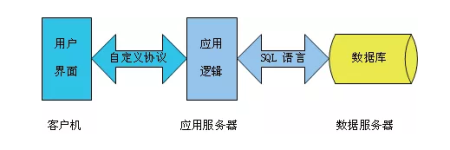
To ensure scalability, reliability, and ease of maintenance, a modern automated yard system must be built on a robust architecture. We recommend a three-tier software architecture, which separates the user interface, business logic, and data management. This design philosophy fully complies with the requirements for standardization and flexibility in complex port environments.
Client, Application Server, and Data Server
The first layer (client) provides an intuitive user interface for remote monitoring by core control staff. The second layer (application server) handles all business logic, such as matching truck identification data with booking records and coordinating barrier logic. The third layer (data server) manages data storage, access, and optimization. Because the business logic is extracted to the application server, it greatly reduces the burden on the client, creating a “thin client” structure that is easy to deploy and update.
Standardized Interfaces for Hardware Integration
A successful system depends on the seamless integration of diverse hardware, including RFID readers, vehicle detectors, and barrier gates. Standardizing interfaces allows these devices to work harmoniously. The system provides a framework for standard input/output, allowing for independent operation as well as coordinated timing control. Our industrial-grade RFID Reader portfolio is designed with open APIs to facilitate this integration, ensuring smooth communication with the Terminal Operating System (TOS) and optimizing resource utilization.
Core System Components and Selection Criteria
The terminal automation RTG yard system is composed of three critical subsystems: the RFID data acquisition system, the RTG channel barrier system, and the vehicle exit barrier system. Each subsystem must be carefully specified for the harsh port environment.
RFID Data Acquisition System
Electronic License Plates (Tags): The foundation of the system is a durable tag attached to the vehicle. These tags must withstand harsh environmental conditions, including UV exposure, rain, and temperature extremes. We offer customized solutions, detailed in our RFID tag product line, which are engineered for long-range UHF performance and high durability on metal surfaces like windshields.
UHF Readers and Antennas: For automated yard gates, UHF technology is the clear choice due to its long read range (up to 10-15 meters) and ability to read tags at high speeds. The equipment is typically installed on a metal vertical pole at the crossing. An embedded host or industrial PC manages the data capture logic, while vehicle detectors and inductive loops trigger the system precisely when a vehicle enters the reading zone.
Technology Differentiation: It is important to distinguish this application from short-range systems. Unlike the palm-of-hand applications typical of NFC chips (ntag213 vs ntag215 comparisons), UHF is indispensable here for extended range and high-speed vehicle identification.
RTG Channel Barrier System
When an RTG transitions between rows or yards, the remote control center needs to know its precise location. The channel barrier system is set up for this purpose. After receiving a movement command, security personnel or a wireless remote control opens the barrier. Once the RTG has fully passed and safety is confirmed, the barrier is closed manually or via wireless control. This provides a crucial safety interlock for automated crane movements.
Vehicle Exit Barrier System
This subsystem prevents vehicles from entering the yard in reverse direction, which is a common safety hazard. It integrates exit barriers, vehicle detectors, network controllers, and ground-sensing coils. When a vehicle leaves and triggers the lift sensor, the barrier lifts. After the vehicle clears the drop sensor, the barrier automatically lowers. This system provides real-time departure signals to the remote control center for accurate traffic counting and billing.
Deployment Considerations for Rugged Environments
Deploying RFID in a port yard presents unique challenges, including heavy machinery, concrete structures, and metal containers that can cause RF interference. Careful planning around antenna placement and ground loop installation is required. We recommend the following best practices:
- Site Survey: Conduct a thorough RF site survey to identify potential interference zones.
- Antenna Polarization: Use circularly polarized antennas to ensure reliable reads on tags mounted at varying angles on windshields.
- Triggering Mechanism: Use buried inductive loops to activate the reader only when a vehicle is present, conserving power and ensuring accuracy.
Choosing a partner with deep hardware expertise is critical for this phase. Partnering with an experienced RFID reader Manufacturer ensures you receive the necessary technical support for site tuning and successful deployment.
Real-World Implementation and Outcomes
In a recent deployment across two container yards involving four automated RTG cranes, our RFID and barrier system demonstrated exceptional stability. The system successfully automated the gate entry and exit processes, providing real-time data to the remote control center. Key results included:
- Reduced Operator Pressure: The system significantly reduced the manual workload on remote control center operators.
- Improved Traffic Clarity: The system provided absolute clarity on truck entry and exit status, eliminating confusion.
- Optimized Scheduling: The automatic scheduling system for the RTG cranes became more efficient due to reliable data input.
Industry Insights: Application Across Sectors
While this analysis focuses on heavy port yards, the principles of automated data capture apply across the supply chain. For instance, the challenge of tracking assets in a logistics distribution center mirrors that of tracking trucks in a yard. In the retail sector, where rfid tags on clothes provide item-level visibility for inventory management, the core value proposition of RFID remains the same: eliminating manual counting and errors. The key difference lies in the robustness of the hardware; a tag designed for a retail garment is not suitable for a port yard, just as a high-power UHF reader may be overkill for a retail fitting room. Selecting the right frequency, form factor, and environmental rating for the specific application is essential for a positive ROI.
Product Selection Guidance
When selecting RFID equipment for yard automation, engineers and procurement managers must look beyond basic specifications. Key factors include:
- Read Range & Speed: Ensure the hardware can cover the full width of the gate and read tags at normal truck speeds (15-25 km/h).
- Environmental Rating: Look for IP65 or higher for outdoor durability against rain and dust. Mil-spec connectors are a plus for vibration resistance.
- Connectivity: Support for Ethernet, PoE, and 4G/5G for remote locations.
- Tag Durability: Must withstand UV exposure and temperature extremes.
- Integration Support: The manufacturer should provide robust middleware or SDKs for easy TOS integration.
Conclusion and Future Outlook
RFID technology is a cornerstone of modern port automation. By implementing a robust three-tier architecture and selecting industrial-grade hardware, terminals can significantly boost efficiency, security, and profitability. The system presented here—combining RFID data acquisition with intelligent barrier control—offers a low-investment, high-return pathway toward full yard automation. As the Internet of Things (IoT) evolves, we anticipate tighter integration between RFID systems, AI-driven video analytics, and autonomous vehicle guidance. Investing in a future-proof RFID infrastructure today is the key to remaining competitive in the logistics of tomorrow.
Frequently Asked Questions (FAQ)
1. What is the typical read range of UHF RFID in a port yard?
With high-performance antennas and optimized settings, UHF systems can reliably achieve read ranges of 10 to 15 meters, sufficient to cover standard truck entry lanes.
2. Can RFID tags withstand harsh outdoor environments?
Yes, specially designed industrial tags (often encapsulated in plastic or epoxy) are built to resist rain, dust, UV radiation, and temperature extremes from -40°C to +85°C.
3. How does the system prevent interference from metal containers?
Proper antenna placement and the use of anti-metal or on-metal tags, combined with careful site tuning and polarization selection, mitigate interference. A site survey is highly recommended.
4. What is the difference between HF/NFC and UHF for this application?
HF/NFC (like NTag chips) has a short range (centimeters) and is unsuitable for high-speed vehicle identification. UHF RFID is the standard for yard automation due to its long range and fast reading capabilities.
5. How long does it take to implement an RFID gate system?
A standard implementation, including hardware installation and software integration, typically takes 4 to 6 weeks. Pilot projects can be accelerated with pre-configured modules.
6. What kind of maintenance does the RFID system require?
The system requires minimal maintenance. Regular firmware updates and periodic cleaning of readers and antennas (to remove dust or salt) are recommended to maintain peak performance.
7. Can the RFID system integrate with my existing Terminal Operating System (TOS)?
Yes, modern systems are designed with standard APIs and support protocols like MQTT, HTTP, and MODBUS for seamless integration with any TOS, ERP, or WMS system.
8. What is the ROI of automating yard gates with RFID?
ROI is realized through reduced labor costs, faster truck turnaround times, elimination of manual data entry errors, and improved yard asset utilization. Many clients see a full ROI within 12 to 18 months.