
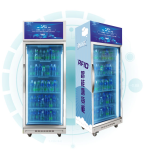
RFID unmanned intelligent vending cabinet opens a new chapter in shopping
 chrispeng
 RFID Unmanned Intelligent Vending Cabinet: A New Chapter in Smart Retail
In the rapidly evolving landscape of retail technology, the RFID unmanned intelligent vending cabinet stands out as a transformative innovation. These high-performance UHF smart vending cabinets enable automatic deduction, high settlement accuracy, and a frictionless shopping experience. From fresh food and cold beverages to pharmaceuticals, consumables, and general retail, RFID-powered cabinets are redefining what it means to shop autonomously.
After several years of development, the once-hyped unmanned shelf concept has matured into a reliable, scalable solution. Key capabilities such as zero inventory shrinkage, open-door self-service, real-time inbound and outbound detection, and support for diverse product types have unlocked a new era of intelligent retail. RFID unmanned smart vending cabinets are not just a trend—they are a new chapter in shopping.
What Is an RFID Unmanned Intelligent Vending Cabinet?
An RFID unmanned intelligent vending cabinet integrates UHF RFID technology, cloud-based payment platforms, and IoT connectivity to create a fully autonomous retail terminal. The system typically includes a container cabinet, a QR code scanner, an RFID reader, a local master control system, and a remote server. Users scan a QR code to unlock the door, take the desired items, and close the door—payment is processed automatically based on the RFID tags detected.
This “scan-open-take-close” workflow eliminates the need for traditional checkout counters, cashiers, or even mobile payment confirmations. The entire transaction is seamless, secure, and completed in seconds.
Core Technology: UHF RFID in Vending Cabinets
At the heart of these cabinets lies Ultra-High Frequency (UHF) RFID technology. UHF RFID operates in the 860–960 MHz frequency range and offers long read ranges (up to several meters) and the ability to read multiple tags simultaneously. This makes it ideal for densely packed retail environments where dozens of products may be taken or returned in one shopping session.
Each product is equipped with a custom RFID tag, which stores a unique identifier linked to the product’s SKU, price, and other metadata. When a user opens the cabinet door, the RFID reader performs an initial inventory scan. After the door is closed, a second scan determines which tags are no longer present, and the system automatically deducts the corresponding amount from the user’s account.
Key Technical Advantages of UHF RFID for Vending
- Multi-tag reading: Up to 200 tags can be read in under 2 seconds, enabling high-speed checkout.
- No line-of-sight required: Tags can be read through packaging, plastic, cardboard, or even some liquids (with appropriate tag tuning).
- Reusable and rewritable: RFID tags can be reused if products are returned, or reprogrammed for different items.
- Durability: Passive UHF tags have no battery and can last for decades under normal conditions.
Comparing Identification Technologies for Unmanned Retail Cabinets
Several identification technologies compete in the unmanned retail space. Below is a technical comparison from a manufacturer’s perspective.
1. UHF RFID Technology
UHF RFID remains the most widely adopted technology for smart vending cabinets. Each product carries an electronic tag, and sensors identify tags for settlement. The main concern is that if a user deliberately damages or removes the tag, the product may not be detected. However, modern anti-tamper tags and AI-assisted visual monitoring mitigate this risk. Additionally, attaching tags to individual products does require labor, but automation in tag application has significantly reduced this overhead in recent years.
2. Visual Sensor Technology
Computer vision uses cameras to identify items taken or returned. While promising, the technology suffers from slower computation speeds during actual shopping, higher error rates in crowded or poorly lit conditions, and strict constraints on product size, placement, and orientation. Scalability across diverse product categories remains limited.
3. Gravity Sensor Technology
Gravity sensors detect weight changes on shelves to infer product movement. The limitations include frequent calibration needs, inability to distinguish products of similar weight, and susceptibility to environmental vibrations. Maintenance costs are high compared to RFID-based systems.
Given these comparisons, most commercial unmanned retail cabinets today rely on UHF RFID for its balance of accuracy, speed, and cost-effectiveness. While some high-frequency (HF) RFID solutions exist, UHF is the dominant choice for its read range and multi-tag capabilities.
System Architecture and Component Selection
From a manufacturer’s perspective, designing a reliable RFID vending cabinet requires careful selection of each subsystem component.
Choosing the Right RFID Reader
The RFID reader is the brain of the system. For vending cabinets, readers must support dense tag populations (100–200 tags) and provide consistent read rates above 99.5%. Look for readers with adjustable transmit power (typically 18–30 dBm), antenna multiplexing support, and fast inventory cycles. An RFID reader manufacturer with proven experience in retail environments can provide modules that integrate easily with IoT platforms.
Antenna Configuration
Proper antenna placement is critical. For a standard cabinet (1.5–2.0 meters tall), two to four linearly polarized antennas mounted at different heights and angles ensure full coverage. Antenna polarization should match the typical orientation of tagged products.
Tag Selection and Attachment
Tag performance directly affects system accuracy. For retail products, flexible RFID sticker tags are preferred for their low profile and ease of application. For products like clothing, RFID tags on clothes are specially designed to withstand laundering and repeated handling. The choice between UHF and NFC (such as NTAG213 vs NTAG215) depends on the use case: UHF for bulk inventory and checkout, NFC for item-level interaction and authentication.
Control System and Connectivity
The local controller manages door lock mechanisms, temperature sensors, and communication with the cloud. 4G/LTE or Wi-Fi backhaul ensures real-time data transmission. The system should support OTA (over-the-air) firmware updates for long-term maintainability.
Deployment Considerations
Implementing RFID vending cabinets at scale requires attention to several practical factors:
Environmental Adaptability
Outdoor cabinets must withstand temperature extremes, humidity, and direct sunlight. Indoor cabinets near metal shelving or concrete walls may experience RF interference. A site survey with a portable RFID analyzer is recommended before installation.
Tag Application Process
For high-volume SKUs, automated tag applicators can apply 50–80 tags per minute. For low-volume or irregular items, handheld applicators are sufficient. Training staff on proper tag placement (avoiding metal surfaces, liquids, and overlapping) improves read rates.
Inventory Management Integration
The cabinet should sync with the retailer’s ERP or WMS system. Automated replenishment alerts, expiration tracking, and sales analytics are key features that justify the upfront investment.
Security and Anti-Theft
While RFID detection is the primary security layer, adding AI-based video recognition can identify tampering behaviors such as tag removal or multiple-item concealment. Combining RFID with visual verification provides near-100% loss prevention.
Practical Applications Across Industries
Fresh Food and Grocery
RFID cabinets keep perishables at controlled temperatures while tracking expiration dates. Customers can pick up pre-packaged salads, sandwiches, or fruit bowls, and the system deducts the correct amount even if products are moved between shelves.
Pharmaceuticals and Healthcare
Hospitals and clinics use RFID cabinets to dispense single-dose medications, track usage, and maintain audit trails. The high accuracy of UHF reading ensures patient safety and regulatory compliance.
Office and Workplace Micro-Markets
In corporate break rooms, RFID cabinets offer 24/7 access to snacks, beverages, and personal care items. No cash handling, no theft risk, and seamless integration with employee ID cards or mobile wallets.
Industrial Consumables
Manufacturing facilities use RFID vending for PPE (gloves, masks, safety glasses), tools, and MRO supplies. The system tracks who took what and when, enabling usage analytics and automatic replenishment.
Industry Insights: The Future of RFID in Retail
The shift toward new retail is accelerating. RFID technology, combined with big data and cloud computing, enables retailers to understand consumer behavior at granular levels—which products are picked up but not purchased, how long customers browse, and what triggers impulse buys.
From a manufacturer’s standpoint, the next frontier is edge computing inside the cabinet. Instead of sending all tag reads to the cloud, local processing can handle real-time decisions (e.g., “did the customer take or return this item?”), reducing latency and bandwidth costs. Another emerging trend is hybrid RFID+AI cabinets that use computer vision to verify tag reads, closing the loop on tamper detection.
The global RFID smart cabinet market is projected to grow at a CAGR of 18–22% through 2030, driven by labor shortages, demand for contactless experiences, and falling tag costs. For RFID reader and tag manufacturers, this represents a significant opportunity to provide integrated, certified solutions rather than standalone components.
Why Choose an RFID-Based Vending Solution?
Retailers and operators benefit from:
- Cashier-free operation: No need for on-site staff, reducing labor costs by up to 60%.
- Real-time inventory visibility: Know exactly what is in each cabinet at any moment.
- Dynamic pricing: Change prices remotely based on demand, time of day, or expiration dates.
- Customer behavior analytics: Track which products are most popular, and optimize shelf placement accordingly.
- Scalability: Deploy one cabinet or thousands, all managed from a single cloud dashboard.
Frequently Asked Questions (FAQ)
1. How accurate is RFID-based settlement in vending cabinets?
With proper installation and high-quality tags, settlement accuracy exceeds 99.5%. Some systems achieve 99.9% when combined with AI video verification and anti-tamper tags.
2. Can RFID vending cabinets handle liquid or metal products?
Yes, but tag selection is critical. For liquids, use tags tuned for dielectric interference; for metal surfaces, use on-metal or foam-backed tags that isolate the antenna from the conductive surface.
3. Do customers need a special app to use the cabinet?
Most systems work with WeChat, Alipay, or standard credit card scanning—no dedicated app required. The user scans a QR code on the cabinet, authorizes payment, and opens the door.
4. What happens if the network connection drops during a transaction?
The local controller stores the transaction data and uploads it when connectivity is restored. This ensures no lost sales or billing errors even during temporary outages.
5. How long does it take to tag a product for RFID vending?
With manual application, approximately 0.5–1 second per tag. With automated applicators, up to 60 tags per minute. Many brands now source pre-tagged products directly from manufacturers.
6. What is the typical ROI period for an RFID vending cabinet?
For high-traffic locations (office buildings, gyms, hospitals), the ROI period is typically 6–12 months when factoring in labor savings, reduced shrinkage, and increased sales from 24/7 availability.
7. Can the same cabinet be used for chilled and ambient products?
Yes, cabinets are available in refrigerated, frozen, and ambient configurations. Some models offer dual-temperature zones within the same unit.
8. How does the system handle product returns (if a customer changes their mind)?
The user simply places the product back on the shelf before closing the door. The second RFID inventory detects the returned item and cancels the deduction. If the door is closed and the user reopens it, the system treats it as a new transaction.
Conclusion
RFID unmanned intelligent vending cabinets are not merely a convenience—they represent a fundamental shift in how retail operates. By combining robust UHF RFID hardware, intelligent software, and seamless payment integration, these systems deliver a shopping experience that is faster, more secure, and more data-rich than anything possible with traditional vending or staffed stores.
For retailers, the message is clear: the technology is mature, the costs are dropping, and the competitive advantage goes to early adopters. Whether you are deploying one cabinet in a break room or scaling to hundreds across a city, working with an experienced RFID solution provider ensures your system is optimized for accuracy, reliability, and long-term value.