
 chrispeng
 RFID Animal Husbandry Management: A Scientific Approach to Livestock Tracking and Traceability
The global livestock industry faces mounting pressure to improve efficiency, ensure food safety, and maintain biosecurity. Traditional manual record-keeping methods are no longer sufficient for modern farms that manage thousands of animals across multiple locations. Radio Frequency Identification (RFID) technology has emerged as the cornerstone of digital transformation in animal husbandry, enabling fully automated data collection, real-time monitoring, and end-to-end traceability from birth to slaughter. As a leading manufacturer of RFID tags, we have witnessed firsthand how this technology replaces paper-based systems with a scientific management mode that reduces labor costs, minimizes human error, and delivers actionable insights.
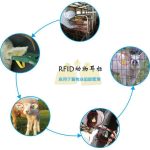
RFID-based animal husbandry management leverages electronic tags as data carriers, attaching a unique digital identity to each animal. This identity is linked to a centralized database containing species, birth date, feeding regimen, vaccination history, and transport records. Mobile handheld readers and fixed portal antennas capture tag data at critical checkpoints—feeding stations, weighing scales, veterinary inspection points, and slaughterhouse gates—without requiring line-of-sight or manual data entry. The result is a complete, auditable digital trail that empowers farm operators, veterinarians, and regulatory authorities to make informed decisions swiftly.
Understanding the RFID Animal Management Ecosystem
Core Components of a Modern Livestock RFID System
An effective RFID animal husbandry system comprises three primary layers: identification hardware, data capture infrastructure, and backend software. The identification layer consists of RFID tags specifically engineered for animal use. These tags are available in multiple form factors—ear tags, injectable glass transponders, rumen boluses, and leg bands—each designed for different species and retention requirements. The tags house a microchip and antenna, with the chip storing a unique identifier that remains constant throughout the animal’s life.
The data capture layer includes handheld readers for mobile inspections, walk-through panels for sorting gates, and stationary antennas at feeding troughs or weighing platforms. These readers communicate with the tags using standardized radio frequencies. In livestock applications, Low Frequency (LF) 125 kHz tags are the industry standard due to their superior performance near metal and in the presence of biological tissue, though UHF tags are gaining traction for long-range reading in open pasture environments.
The software layer aggregates all captured data into a centralized management platform. This platform handles data storage, analytics, alarm generation, and integration with external systems such as government livestock registries or supply chain traceability databases. When an HDX or FDX tag is read, the software instantly updates the animal’s record, triggering workflows such as weight gain calculations, vaccination reminders, or movement authorizations.
How Unique Identification Elevates Management Capabilities
The foundation of RFID-enabled animal husbandry is the assignment of a unique, non-replicable ID code to each animal. This code becomes the key that unlocks every data point associated with that animal across its entire lifecycle. Unlike barcodes, which require manual scanning and are prone to damage or misreading, RFID tags can be read automatically in harsh conditions—rain, mud, dust, and extreme temperatures—ensuring data integrity even in challenging farm environments.
From a management perspective, unique identification enables precision livestock farming. Instead of managing animals as a homogeneous herd, operators can track individual performance metrics: daily feed intake, weight gain curves, milk yield, activity levels, and health indicators. This granularity allows for early detection of illness, optimization of feed conversion ratios, and selective breeding decisions based on actual data rather than visual observation alone.
Technical Advantages of Adopting RFID in Animal Husbandry
Fully Automated Data Collection and Identification
The most immediate benefit of RFID in livestock management is the elimination of manual identification work. Staff no longer need to read ear tag numbers by eye or punch data into a spreadsheet. When an animal passes through a reading zone—whether a sorting race, a feeding station, or a weigh crate—the system automatically captures its ID along with a timestamp. This automation reduces labor requirements by up to 70% for routine monitoring tasks and eliminates transcription errors that plague paper-based systems.
Moreover, automated identification supports continuous monitoring. In a dairy operation, for example, each cow’s milking frequency, milk volume, and even somatic cell count can be tied to its RFID tag. Any deviation from the individual’s baseline triggers an alert, enabling proactive intervention before a minor health issue becomes a costly problem.
End-to-End Lifecycle Traceability
Traceability is the most critical function of an RFID animal management system, particularly in the context of food safety and disease control. The system records every significant event in an animal’s life: birth, movements between farms, feed changes, veterinary treatments, transport to auction, and slaughter. This data is centrally backed up and can be accessed instantaneously by authorized personnel.
In the event of a disease outbreak—such as foot-and-mouth disease or African swine fever—the traceability system allows authorities to identify all potentially exposed animals within minutes. They can trace forward to find where infected animals have been moved and trace backward to determine the source of contamination. This capability is not just a regulatory requirement in many countries; it is a vital tool for containing outbreaks before they devastate regional livestock populations.
Operational Efficiency and Reduced Labor Burden
RFID technology transforms the economics of farm management by automating data-intensive tasks. Consider a typical beef feedlot: without RFID, staff must manually record each animal’s health checks, feed rations, and treatments. With an integrated system, a handheld reader captures the animal’s ID as the veterinarian approaches, and the treatment record is completed with a few taps on a mobile device. The data flows directly into the management platform, eliminating paperwork, reducing the risk of forgotten treatments, and freeing skilled labor for higher-value tasks.
Data Security and System Reliability
Modern RFID tags used in animal husbandry are built for harsh agricultural environments. Our tags feature robust encapsulation that resists moisture, chemicals, and physical impact. The read success rate exceeds 99.5% under normal operating conditions, ensuring that no animal goes unrecorded. On the server side, we deploy high-availability architectures with redundant storage and real-time data replication. This guarantees that even if a local network fails, data is buffered and transmitted once connectivity is restored, preserving the continuity of the record.
Enhanced Management Visibility and Decision Support
With RFID, farm managers gain unprecedented visibility into operations. Dashboards display real-time metrics such as average daily weight gain, mortality rates, treatment frequency, and feed efficiency. Alerts can be configured to notify managers when an animal misses a feeding event, which may indicate illness, or when a group’s performance deviates from the expected curve. This shift from reactive to proactive management drives better outcomes: lower mortality, higher productivity, and reduced veterinary costs.
System Scalability for Growing Operations
An RFID system designed with future growth in mind can scale from a single farm of fifty animals to a multi-site enterprise with tens of thousands of head. Adding new animals is as simple as applying a tag and registering it in the database. Expanding to new facilities involves installing additional readers and configuring the software to recognize the new location. The modular architecture of our platform ensures that capacity can be increased without replacing existing hardware or retraining staff.
Real-World Applications Across the Livestock Value Chain
Breeding and Genetic Management
In breeding operations, RFID tags enable precise tracking of pedigree data. Each animal’s parentage, birth weight, weaning weight, and genetic markers are linked to its ID. Breeders can analyze performance data across generations to select animals with superior traits—higher milk production, faster growth rates, or better disease resistance. This data-driven approach accelerates genetic improvement and increases the profitability of the breeding program.
Feedlot and Fattening Operations
Feedlots benefit from RFID-enabled automated feeding systems. When an animal approaches a feed station, the reader identifies it and the system dispenses a customized ration based on its weight, age, and target growth curve. This precision feeding reduces feed waste, prevents overfeeding, and ensures each animal receives the nutrition it needs. Integration with weighing scales further enables real-time calculation of feed conversion ratios, allowing managers to identify underperforming animals early and adjust their rations accordingly.
Dairy Herd Management
Dairy farms have been early adopters of RFID technology. Modern milking parlors are equipped with automatic identification systems that read each cow’s tag as she enters the stall. The system records milk yield, flow rate, and conductivity (a proxy for mastitis detection). This data is combined with activity monitors worn on the leg or neck to detect estrus, enabling timely artificial insemination. The result is improved reproductive efficiency, higher milk production, and reduced veterinary costs.
Transportation and Slaughterhouse Traceability
The traceability chain extends beyond the farm gate. When animals are transported to auction or slaughter, their RFID tags are read at loading and unloading points, creating a digital handover record. At the slaughterhouse, tags are read again at the stunning point and during carcass grading. This ensures that each carcass can be traced back to its farm of origin, supporting quality assurance programs and enabling rapid recall if contaminants are detected. For export-oriented operations, this level of traceability is often a mandatory requirement for accessing premium markets.
Deployment Considerations for RFID Animal Management Systems
Selecting the Right Tag Technology: HDX vs. FDX
One of the most important decisions in deploying an RFID animal system is the choice between Half-Duplex (HDX) and Full-Duplex (FDX) tag communication protocols. Both operate at 134.2 kHz, but they differ in how they handle data transmission. HDX tags store energy from the reader field and transmit data after the field pauses, while FDX tags transmit continuously while energized. Understanding the differences between HDX and FDX tags is critical for system performance. HDX tags generally offer better read range and noise immunity, making them suitable for large-scale installations with metal infrastructure or electrical interference. FDX tags, on the other hand, are widely compatible with global standards (ISO 11785) and are often the preferred choice for operations that require interoperability with multiple reader brands.
Tag Form Factor and Attachment Method
The choice between ear tags, boluses, injectables, and leg bands depends on the species, retention duration, and environmental conditions. Ear tags are the most common and cost-effective solution for cattle, sheep, and goats. They are applied with a specialized applicator and designed to last the animal’s lifetime, though they can be lost in dense brush or during aggressive behavior. Rumen boluses are ceramic capsules that sit in the animal’s reticulum and provide permanent identification, but they require trained personnel for administration. Injectable glass transponders are inserted subcutaneously and are virtually impossible to remove, making them ideal for high-value breeding stock or situations where tamper-proof identification is required.
Reader Infrastructure and Data Integration
Planning reader placement is critical for achieving reliable data capture. Walk-through portals should be positioned at natural chokepoints such as sorting races, weigh stations, and gate entrances. Handheld readers are essential for inspection rounds and veterinary checks. All readers must be configured with the correct frequency, power output, and antenna polarization to match the selected tags. On the software side, integration with existing farm management systems—such as herd management software or ERP platforms—requires careful planning of data formats, API connectivity, and data synchronization schedules. We recommend working with an experienced integrator to ensure seamless data flow across all systems.
Tagging Protocols and Data Standards
For international operations, compliance with ISO 11784 and ISO 11785 standards is essential. These standards define the data structure of animal identification codes and the communication protocol between tags and readers. Using compliant tags ensures that animals tagged on one farm can be read by any compliant reader downstream, supporting cross-border traceability. For operations that also require NFC readability for companion animals or specialty livestock, the NTAG213 vs NTAG215 comparison becomes relevant for selecting the appropriate NFC chip if smartphone-based reading is desired. While NTAG chips are more common in consumer goods and pet identification, they complement traditional LF RFID in hybrid systems where both automated and smartphone-based reading are needed.
Product Selection Guidance: Choosing the Right RFID Tag for Your Livestock Operation
Selecting the optimal RFID tag involves balancing performance, cost, and durability against the specific demands of your operation. For cattle and sheep in permanent housing, an FDX ear tag with a durable polyurethane body offers a good balance of read performance and retention. For open-range operations where tags may snag on vegetation, a low-profile button tag or a rumen bolus may be more appropriate. For swine, which are prone to chewing and rubbing, injectable transponders placed behind the ear provide reliable, long-term identification.
When evaluating tags, pay close attention to the read range specifications. Typical LF tags achieve read distances of 10–30 cm with handheld readers and up to 80 cm with fixed portal antennas. If your operation requires hands-free reading at greater distances, consider UHF tags operating at 860–960 MHz, which can achieve read ranges of several meters. However, UHF performance can be affected by the animal’s body fluid content, so field testing is essential before large-scale deployment.
For operations that also need to track equipment, feed bins, or pharmaceutical containers, the same infrastructure can be extended using NTAG215 NFC tags for short-range, smartphone-readable applications. This allows staff to use their personal phones to verify medication details or equipment maintenance schedules without needing a dedicated reader.
Industry Insights and Future Directions
The adoption of RFID in animal husbandry is accelerating globally, driven by regulatory mandates, consumer demand for sustainably sourced food, and the economic benefits of precision livestock farming. The EU, for example, has mandated electronic identification for sheep and goats since 2010, and similar regulations are emerging in other regions. In the beef and dairy sectors, major retailers and food service chains now require suppliers to demonstrate full traceability from farm to fork, making RFID a competitive necessity rather than an optional investment.
Looking forward, the integration of RFID with other sensor technologies—GPS collars for pasture monitoring, accelerometers for behavior analysis, and environmental sensors for housing conditions—will create even richer data streams. Artificial intelligence and machine learning algorithms will analyze this data to predict disease outbreaks, optimize feeding strategies, and automate culling decisions. The RFID tag will remain the anchoring identifier that ties all these data sources together, serving as the permanent digital link for each animal throughout its life.
Frequently Asked Questions
1. What is the typical lifespan of an RFID ear tag used in livestock?
High-quality RFID ear tags are designed to last the lifetime of the animal, which can be 8–12 years for cattle and 5–7 years for sheep. The tag body is made from UV-resistant polyurethane or TPU, and the chip is encapsulated to withstand moisture, chemicals, and physical stress. However, physical loss due to snagging can occur, so regular inspection and a low rate of replacement should be factored into the management plan.
2. Can RFID tags be reused when an animal is sold or slaughtered?
No, RFID tags used for animal identification should never be reused. The unique ID on the tag is permanently linked to that specific animal’s history and records. Reusing a tag would break the traceability chain and could create serious biosecurity and food safety risks. When an animal is processed, the tag should be removed and destroyed, and a new tag applied to any replacement animal.
3. Which frequency is best for livestock RFID systems?
Low Frequency (LF) at 125 kHz or 134.2 kHz is the standard for livestock identification worldwide. LF signals penetrate biological tissue well and are not significantly affected by the animal’s body fluid content. UHF systems offer longer read ranges but are less reliable for individual animal identification in close quarters. For most livestock applications, LF is the recommended choice due to its proven reliability and international standardization.
4. How does RFID improve disease outbreak response?
In an outbreak scenario, RFID enables rapid identification of all animals that have been in contact with infected individuals. The centralized database stores movement history, sharing of equipment, and proximity data from RFID reads. Authorities can query the system to produce a complete contact network within hours, rather than days, and implement targeted quarantine measures. This speed is critical for containing highly contagious diseases and minimizing economic losses.
5. What is the difference between HDX and FDX RFID tags, and which should I choose?
HDX (Half-Duplex) tags store energy during a reader field pause and then transmit data, offering better read range and noise immunity in electrically noisy environments. FDX (Full-Duplex) tags transmit continuously while energized and are defined by the ISO 11785 standard. FDX tags are more widely compatible with readers from different manufacturers. For most commercial farms, FDX tags are the safest choice due to their interoperability, while HDX may be preferred for large feedlots with significant metal infrastructure or high electromagnetic interference.
6. Can RFID work with existing farm management software?
Yes, most RFID systems offer API-based integration with popular herd management, ERP, and accounting software. The data captured by RFID readers—animal ID, weight, treatment history, movement records—can be exported in standard formats (XML, JSON, CSV) and imported into the farm’s existing platform. We recommend verifying the integration capability during the system selection process and requesting a pilot test with your current software vendor.
7. Is RFID cost-effective for small farms?
While the upfront investment in RFID readers and tags is higher than traditional methods, the return on investment is often favorable even for small farms when labor savings and reduced error rates are considered. A typical small dairy farm with 100 cows can save 300–500 hours of manual record-keeping per year. If the farmer’s time is valued at $20/hour, that represents $6,000–$10,000 in annual savings, which typically covers the system cost within 12–18 months.
8. What happens if an RFID tag fails or is lost?
In the rare event of tag failure or loss, the animal must be re-tagged with a new RFID tag, and the old ID should be cross-referenced with the new ID in the database. The system should maintain a history that links the old ID to the new one so that the animal’s full record is preserved. To minimize the impact of lost tags, we recommend using tamper-evident tags with high retention strength and training staff to inspect tags weekly for signs of damage.