
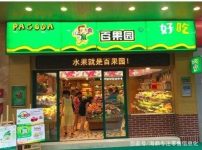
Haiding provides electronic label weighing product sorting solutions for Baiguoyuan
 chrispeng
 Haiding Electronic Label Weighing & Product Sorting Solutions for Baiguoyuan: A Case Study in Intelligent Retail Distribution
Industry Context: The Challenge of Fresh Food Distribution at Scale
The fresh fruit retail sector presents unique logistics challenges. Products vary in weight, shape, and perishability, requiring rapid yet accurate sorting and distribution. For chain enterprises like Baiguoyuan, which operates hundreds of stores across China, the margin for error in distribution is razor-thin. A mis-sorted pallet or an incorrectly weighed batch can lead to inventory discrepancies, store-level stockouts, and significant food waste.
Founded in Shenzhen in 2001, Baiguoyuan has grown into a fully integrated fruit enterprise encompassing procurement, planting support, post-harvest preservation, logistics, warehousing, and retail operations. Its Chengdu Distribution Center spans over 6,000 square meters, servicing nearly 160 stores in the region. As business volume grew, the limitations of manual sorting and paper-based weighing processes became a bottleneck. Manual data entry introduced errors, operator training consumed time, and real-time visibility into inventory movement was minimal.
In early 2020, Baiguoyuan partnered with Haiding to deploy an electronic label sorting system (HDDPS) at the Chengdu facility. Successfully launched on April 12, 2020, the solution transformed the distribution center into a highly intelligent and flexible operation, dramatically improving sorting efficiency and operator accuracy.
System Architecture: How the Electronic Label Sorting System Works
At the core of the Haiding HDDPS is a networked electronic label system that replaces traditional paper pick lists and manual data entry. Each storage or staging location is equipped with an electronic label that communicates with the central Warehouse Management System (WMS) in real time. These labels serve as visual indicators and interactive input devices, guiding operators through every step of the sorting process.
The system architecture comprises three primary layers:
- Hardware Layer: Electronic labels affixed to storage positions, wireless barcode scanners, Bluetooth printers carried by operators, and connected electronic scales.
- Communication Layer: A wireless network (typically Wi-Fi or ZigBee) linking the electronic labels to the central server, enabling sub-second response times for label updates.
- Software Layer: The HDDPS middleware integrates with the existing WMS, translating warehouse logic into visual cues (lights, numbers, and colors) on the electronic labels.
The system leverages custom RFID tags and barcode labels for product identification, ensuring each item is uniquely tracked from receipt to dispatch.
Key Operational Features and Workflow
1. Automatic Standard vs. Non-Standard Product Differentiation via Colored Lights
When an operator retrieves a product from its temporary storage position, he scans the product’s central label using a wireless barcode scanner. The electronic label system instantly checks the product attributes against the WMS database. Products that require weighing (non-standard items like loose fruits) are distinguished from standard-case items through a simple but effective color-coded light system on the electronic label. This eliminates the need for operators to memorize product categories or consult paper lists, reducing decision time to near zero.
2. Seamless Integration with Electronic Scales for Weighing
For products that require weighing, the operator places the item on an electronic scale. The HDDPS automatically captures the weight data from the scale and transmits it to the WMS. This eliminates the error-prone step of manual weight entry. The system verifies that the weight falls within acceptable tolerances and updates inventory levels in real time. This integration is particularly critical for high-value fruits where weight-based pricing and inventory accuracy directly impact profitability.
The reliability of this data capture depends on the quality of the underlying identification media. For applications requiring robust, reusable tagging of totes or pallets, understanding the difference between FDX and HDX RFID tags helps in selecting the right technology for the environment.
3. Automated Bluetooth Label Printing Triggered by Electronic Labels
Once a seeding operator completes the picking of a product batch, he scans the electronic label at the destinating (seeding) position. This action triggers a chain reaction: the WMS generates the distribution data, and a Bluetooth printer carried by the operator automatically prints a distribution label. This label contains critical downstream information — store name, distribution position number, collection route, and collection location. The operator affixes this label to the product, enabling follow-up collection staff to route items correctly with zero verbal handover. This closed-loop labeling system reduces misrouting errors by up to 90% compared to manual label application.
4. Intelligent Out-of-Stock Handling
Out-of-stock (OOS) situations are inevitable in fresh food distribution. When a seeding operator encounters a product that is out of stock and cannot be replenished, the HDDPS provides a controlled workflow: the operator adjusts the quantity displayed on the electronic label to the actual available quantity, then uses a function key on the label to trigger a “shortage” flag. The system automatically cancels all downstream allocation tasks for the unavailable product, extinguishes the electronic labels at unprocessed destinating positions, and redirects the operator to the next picking task. This prevents partial shipments from being sent to stores, which would otherwise cause customer dissatisfaction and logistics waste.
Deployment Considerations for Fresh Food Distribution Centers
The successful implementation at Baiguoyuan’s Chengdu Distribution Center offers several lessons for other enterprises considering electronic label sorting:
- Infrastructure Readiness: A robust wireless network is essential for real-time label updates. The Chengdu facility required a site survey and access point deployment to ensure blanket coverage across 6,000+ square meters.
- Integration Depth: The HDDPS must be deeply integrated with the WMS — not just at the API level, but also at the business logic level. For example, the system needs to understand which products are weigh-required and what tolerance thresholds apply.
- Operator Training: While the system reduces cognitive load, operators must be trained on the new workflows, including how to use the function keys on electronic labels and how to handle exception cases like shortages or damaged products.
- Tag and Label Selection: The choice of identification media is critical. For reusable totes or high-value produce, comparing NTAG215 vs NTAG213 NFC tags can inform decisions about read range and memory requirements for store-level tracking.
- Scalability: The HDDPS architecture should support the addition of new storage positions, electronic labels, and even new distribution centers without requiring a complete system overhaul.
Measurable Results: Tangible Improvements in Distribution Efficiency
Since the deployment of the HDDPS at the Chengdu facility, Baiguoyuan has reported the following operational improvements:
- Sorting Speed: Average picking and sorting time per order reduced by approximately 35%, driven by the elimination of manual head-down checking and data entry.
- Accuracy Rate: Distribution accuracy improved to over 99.5%, as the electronic labels eliminated mis-picks and the automatic weighing integration removed manual weight entry errors.
- Training Time: New operator onboarding time was cut from several days to a few hours, because the system guides operators visually rather than requiring them to memorize layouts or procedures.
- Inventory Visibility: Real-time weight and quantity data flowing from the scales to the WMS improved inventory accuracy, enabling better replenishment planning at the store level.
- Seamless Handover: The Bluetooth-printed distribution labels enabled faster collection and dispatch, with store-level personnel able to cross-check incoming goods against the labels without needing to contact the distribution center.
Product Selection Guidance: Choosing the Right Technology for Your Distribution Center
Manufacturers evaluating electronic label sorting systems for their own operations should consider the following factors:
| Factor | Consideration | Recommended Technology |
|---|---|---|
| Product Variety | High mix of weigh-required vs. fixed-weight items | Electronic labels with color-coded differentiation (like HDDPS) |
| Throughput Volume | High volume (10,000+ picks/day) | Wireless barcode scanners + automated Bluetooth printing |
| Operators | High turnover or seasonal workforce | Visual-guided electronic labels with minimal text |
| Integration Environment | Existing WMS or ERP system | Middleware with REST API or message queue connectivity |
| Cost Sensitivity | High | Consider hybrid approach: electronic labels for high-value items, paper labels for low-value bulk items |
For specific applications like tracking clothing or textile items (e.g., employee uniforms or reusable packaging), deploying RFID tags on clothes and textiles provides an additional layer of asset tracking that can be integrated with the electronic label system.
Industry Insights: The Future of Fresh Food Distribution with IoT
The Baiguoyuan case study illustrates a broader trend in retail logistics: the convergence of Internet of Things (IoT) devices, real-time data capture, and visual workflow guidance. As RFID and electronic label technologies become more affordable, even mid-tier distribution centers can now deploy systems that were once reserved for high-end e-commerce fulfillment centers.
Key trends shaping this space include:
- AI-Assisted Sorting: Machine learning algorithms are beginning to predict which products are likely to be out of stock based on historical patterns, enabling proactive allocation adjustments.
- Sensor Fusion: Electronic labels are evolving to include temperature and humidity sensors, critical for cold-chain compliance in fresh fruit distribution.
- Edge Computing: Processing data locally at the distribution center reduces latency for mission-critical sorting decisions.
- Interoperability: Industry standards like GS1 are driving better compatibility between electronic label systems and enterprise software, reducing integration costs.
- NFC for Store-Level Verification: At the store level, NTAG215 NFC tags can be used for verification touchpoints, allowing store staff to confirm receipt of high-value items with a simple smartphone tap.
For manufacturers of RFID and electronic label solutions, the key competitive differentiator is no longer just the hardware — it is the depth of integration with warehouse management systems and the ability to handle exception workflows (shortages, damages, returns) that separate an effective system from a frustrating one.
Frequently Asked Questions (FAQ)
1. What is an electronic label sorting system (HDDPS)?
An electronic label sorting system, such as the Haiding HDDPS, replaces paper pick lists and manual data entry with networked electronic labels at each storage position. These labels display quantities, colors, and instructions to guide operators through picking and sorting workflows in real time, integrating with warehouse management systems for accuracy and traceability.
2. How does the system distinguish between products that need weighing and those that do not?
When the operator scans the product label, the system retrieves product attributes from the WMS. If the product requires weighing (non-standard item), the electronic label lights up in a specific color (e.g., amber) to signal the operator to place the item on the connected scale. Standard-case items are indicated by a different color (e.g., green), allowing the operator to proceed directly to sorting.
3. Can the system handle out-of-stock situations without disrupting the entire workflow?
Yes. The HDDPS includes a dedicated out-of-stock handling workflow. The operator adjusts the quantity on the electronic label to reflect the actual available stock and presses a function key to register the shortage. The system then cancels all downstream allocations for that product, extinguishes the electronic labels at unprocessed destinating positions, and seamlessly moves the operator to the next available picking task.
4. What type of RFID tags or labels are used in this system?
The system primarily uses barcode labels for product identification at the individual item level. For reusable assets such as totes, pallets, or reusable containers, custom RFID tags can be applied to enable bulk scanning and real-time tracking. The choice between FDX and HDX RFID tags depends on the specific environment — for example, high-density metal environments might favor HDX, while standard applications work well with FDX.
5. How long does it take to train operators on the electronic label sorting system?
Operator onboarding time is significantly reduced compared to traditional paper-based systems. At the Baiguoyuan Chengdu facility, new operators could achieve full productivity within a few hours of training, compared to several days previously. The visual guidance provided by the electronic labels (color lights, numeric displays, and function keys) minimizes the need for memorization.
6. Can the electronic label system be integrated with existing warehouse management software?
Yes. The HDDPS is designed to integrate with existing WMS platforms through standard APIs, message queues, or database-level integration. The system reads product master data, order information, and inventory levels from the WMS, and writes back real-time transaction data (picks, weights, shortages) to maintain synchronization. The integration depth depends on the WMS capabilities and the complexity of the business rules.
7. What is the typical ROI timeline for an electronic label sorting system in fresh food distribution?
Based on industry benchmarks and the Baiguoyuan case study, distribution centers typically achieve return on investment within 12 to 18 months. The primary savings come from reduced labor costs (faster picking, shorter training), improved accuracy (fewer mis-shipments and returns), and better inventory management (reduced waste from expired or damaged products). High-volume facilities may recoup their investment even faster.
8. How does the Bluetooth printer integration work in the sorting workflow?
Each seeding operator carries a Bluetooth printer. When the operator completes picking at a destinating position and scans the electronic label, the HDDPS triggers the WMS to generate distribution data. This data is sent wirelessly to the Bluetooth printer, which prints a distribution label containing the store name, distribution position number, collection route, and collection location. The operator affixes this label to the product, enabling downstream collection staff to route it correctly without any manual handover or verbal communication.
Conclusion: A Foundation for Nationwide Rollout
The successful launch of the electronic label sorting pilot project at Baiguoyuan’s Chengdu Distribution Center has proven that even complex fresh food distribution workflows can be automated and optimized with the right technology stack. The system solved long-standing pain points — manual weight entry errors, slow operator training, and lack of real-time visibility — while laying a solid foundation for rolling out the same model to Baiguoyuan’s other distribution centers across China.
For manufacturers and retailers alike, the lessons from this deployment are clear: investment in intelligent, visually guided sorting systems not only improves operational metrics but also creates a scalable platform for future growth. As RFID and electronic label technologies continue to mature, the integration points with IoT sensors, AI analytics, and cloud-based WMS will only deepen, making the distribution center of tomorrow more responsive, efficient, and resilient.