
Intelligent manufacturing “secret order”-the application and value of RFID technology in manufacturing and logistics
 chrispeng
 Intelligent Manufacturing “Secret Order”: The Application and Value of RFID Technology in Manufacturing and Logistics
In the era of the Internet of Everything, industries across the board are leveraging IoT technologies to bridge physical and digital operations. At the core of this transformation is RFID (Radio Frequency Identification) technology — the key enabler of real-time data connection and communication. How can material distribution processes be viewed in real time? How can individual products in retail stores be quickly located and counted? How can stolen items be retrieved swiftly? This article will answer these questions one by one and, through real-world use cases, unlock the “secret order” of intelligent manufacturing.
Understanding RFID Technology: Core Features and Advantages
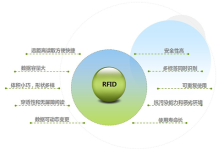
RFID technology offers a host of advantages that make it indispensable in modern manufacturing and logistics environments. These include non-contact operation, large data capacity, high-speed reading, excellent fault tolerance, resistance to interference and corrosion, and robust security and reliability. Unlike traditional barcode systems, RFID does not require line-of-sight scanning. It can adjust identification distance flexibly and read hundreds of electronic tags simultaneously. Furthermore, RFID signals can penetrate non-metallic materials, enabling identification of tags placed inside objects or packaging.
For manufacturers and logistics providers, these features translate into tangible operational benefits: reduced manual labor, faster throughput, higher data accuracy, and enhanced traceability across the supply chain.
The Seven-Step RFID Implementation Framework
Successful deployment of an RFID system requires a structured approach. Based on our extensive experience as an RFID reader manufacturer, we recommend the following seven-step framework to ensure seamless integration and maximum ROI:
Step 1: System Process Design
Clearly define and document the operational workflows and business activities that the RFID system will support. This includes mapping out material flow, data capture points, and decision-making touchpoints.
Step 2: System Integration Framework Design
Determine the overall system architecture, network topology, and database structure. Define how the RFID system will interface with existing enterprise systems such as MES (Manufacturing Execution Systems), ERP (Enterprise Resource Planning), and WMS (Warehouse Management Systems). Establish integration strategies, interface specifications, and data management protocols.
Step 3: System Function Configuration
Translate defined functions into application software modules. Common functional domains include warehouse management, material distribution management, quality management, asset management, supply chain logistics management, supplier management, maintenance service management, and product lifecycle data management.
Step 4: Selection of RFID Equipment
Choose RFID hardware based on the production environment and system characteristics. Key environmental factors include temperature, humidity, electromagnetic radiation, pH levels, and the material composition of surrounding equipment. Production system factors include throughput rate, cycle time, cost constraints, reliability requirements, real-time performance needs, and data security demands. When selecting RFID tags, consider read range, memory capacity, form factor, and durability. For readers, evaluate read speed, antenna configuration, and protocol compatibility.
Step 5: Identification Point and Layout Design
Identify the number and physical locations of RFID read points in the application scenario. Determine installation methods and antenna layouts based on site-specific characteristics such as conveyor speed, item spacing, and environmental interference.
Step 6: Coding Format and Content Design
Define the data structure stored on each RFID tag. The encoding content should align with the enterprise’s application level, industry domain, and business objectives. The encoding format must comply with industry standards and remain compatible with existing barcode or EDI formats to facilitate data sharing and integration.
Step 7: System Implementation and Evaluation
Deploy the system according to the design specifications, conduct thorough testing, and establish performance benchmarks. Ongoing evaluation ensures the system continues to meet operational requirements and delivers measurable business value.
RFID Investment Risk Analysis: Key Considerations
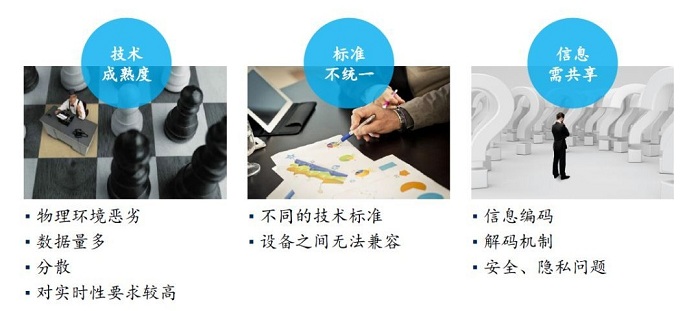
RFID technology is still evolving, and its implementation places higher demands on recognition rates, stability, reliability, data processing capabilities, data quality, and integration with existing systems. Companies should carefully evaluate the following factors before investing in RFID infrastructure:
- Read rate and accuracy: Ensure the chosen tags and readers achieve the required read rates in the specific operating environment.
- Environmental robustness: Assess temperature extremes, moisture, vibration, and chemical exposure that may affect tag and reader performance.
- Integration complexity: Evaluate the effort required to integrate RFID data with MES, ERP, and other enterprise systems.
- Scalability: Choose a system that can grow with the business, supporting additional read points, tags, and facilities.
- Total cost of ownership: Consider not only hardware costs but also installation, configuration, training, maintenance, and tag replenishment expenses.
- Data security: Implement encryption and authentication mechanisms to protect sensitive data stored on tags and transmitted over the network.
Real-World Application Case Study: McKinsey’s Digital Capability Development Center
At McKinsey’s Beijing Digital Capability Development Center — specifically the “Clear Wheat” gearbox learning factory — RFID technology use cases effectively demonstrated full-process production line tracking and optimized inventory management. This case study illustrates the tangible benefits that RFID brings to both discrete manufacturing and logistics operations.
Section 1: Production Line Management — Material Assembly and Customized Production
Challenges
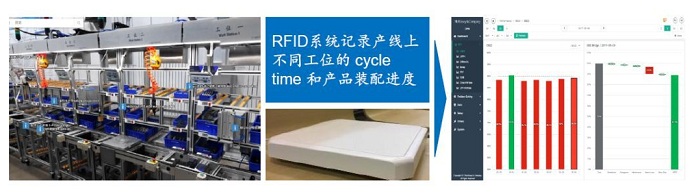
Traditional assembly lines often suffer from mismatched production tempo across different stations. Inefficient manual operations and skill variability among employees create bottlenecks, leading to significant reductions in overall production efficiency. These issues are particularly acute in high-mix, low-volume environments where customized production is the norm.
Solution
An ultra-high frequency (UHF) RFID reader system was deployed to recognize passive electronic tags attached to products moving through the assembly line. The system records cycle time and assembly progress at each station. By integrating the RFID system with digital SOP (Standard Operating Procedure) and Andon systems, real-time guidance is provided to assembly operators. The data collected feeds into a DPM (Digital Performance Management) system, which analyzes operational metrics and delivers actionable insights for large-scale customized production.
Results
With the RFID system in place, the assembly line achieves full-process data tracking. The read and recorded data is analyzed to enable lean production, reduce waste, balance station workloads, and accelerate the factory’s digital transformation. Operators receive precise instructions, minimizing errors and shortening learning curves.
Section 2: Inventory Management — Integrated Solutions for Data Reading, Recording, Analysis, and Display
Challenges
The gearbox factory faced persistent inventory management difficulties. Reliance on manual data entry led to frequent errors in material picking, inbound, and outbound processes. Filling and updating forms was time-consuming and labor-intensive, and information was always one step behind actual operations. Inventory inaccuracies resulted in production delays, excess stock, and increased carrying costs.
Solution
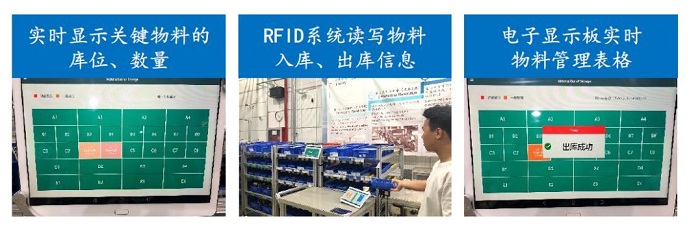
An RFID system comprising UHF readers and passive tags was deployed to automatically capture material movement. Every time materials are received, moved, or shipped, the reader records the tag data and updates the inventory database in real time. Electronic display boards show the location and quantity of key materials at a glance. The system automatically detects location changes and performs floating inventory counting without manual intervention.
Results
After introducing the RFID system, the electronic display board presents real-time inventory information, enabling warehouse staff to make faster and more accurate decisions. Inventory counting efficiency increased dramatically, while error rates dropped to near zero. The ability to visualize inventory in real time transformed warehouse operations from reactive to proactive.

RFID in Logistics: Enabling Supply Chain Visibility
Beyond the factory floor, RFID technology plays a critical role in logistics and supply chain management. By attaching RFID tags to pallets, cases, and individual items, logistics providers can achieve end-to-end visibility of goods in transit. RFID readers installed at distribution centers, loading docks, and waypoints automatically capture shipment data, eliminating manual checks and reducing theft and loss.
The dynamic management of goods transportation — both upstream and downstream — becomes a reality with RFID. Real-time tracking allows logistics managers to optimize route planning, improve delivery accuracy, and respond faster to disruptions. This level of visibility also supports compliance with regulatory requirements and customer mandates for traceability.
Product Selection Guidance: Choosing the Right RFID Solution
Selecting the appropriate RFID hardware is critical to project success. Here are key considerations for tags and readers:
RFID Tag Selection
- Frequency band: LF (125 kHz) for metal and liquid environments, HF (13.56 MHz) for item-level tracking and NFC applications, UHF (860–960 MHz) for long-range, high-speed reading in logistics and manufacturing.
- Form factor: Labels, hard tags, inlays, and specialty form factors for different mounting surfaces.
- Memory: From 96-bit EPC to multi-kilobyte user memory for additional data storage.
- Durability: Resistance to heat, chemicals, moisture, and mechanical stress based on application environment.
RFID Reader Selection
- Read range: Fixed readers for high-throughput portals and conveyors; handheld readers for mobile inventory counting and asset verification.
- Antenna configuration: Single or multiple antenna ports for coverage area flexibility.
- Protocol support: Compliance with EPC Gen2 (ISO 18000-6C) and other relevant standards.
- Connectivity: Ethernet, Wi-Fi, Bluetooth, RS-232, USB, and industrial fieldbus options for system integration.
- Environmental rating: IP rating for dust and water ingress protection in harsh industrial settings.
Industry Insights: Manufacturing, Retail, and Logistics
RFID adoption is accelerating across multiple industries:
- Manufacturing: Work-in-progress tracking, tool and die management, quality control, and asset utilization monitoring. RFID enables real-time production visibility, supporting Industry 4.0 initiatives.
- Retail: Item-level inventory accuracy, loss prevention, omnichannel fulfillment, and enhanced customer experience. Retailers using RFID achieve inventory accuracy above 95%, compared to 60–70% with manual methods.
- Logistics: Yard management, shipment verification, cross-docking optimization, and reverse logistics. RFID reduces processing times by up to 40% and improves shipment accuracy to 99.9%.
Frequently Asked Questions (FAQ)
Q1: What is the difference between passive and active RFID tags?
Passive tags have no internal battery and harvest energy from the reader’s signal. They are low-cost, compact, and ideal for high-volume applications. Active tags have an onboard battery, providing longer read range (up to 100 meters) and higher data transmission rates, but at a higher cost and larger form factor. For most manufacturing and logistics applications, passive UHF tags offer the best balance of performance and cost.
Q2: Can RFID tags be reused?
Yes, many RFID tags, especially those mounted on reusable assets like totes, pallets, and containers, can be reused thousands of times. Reusable tags are typically encased in durable materials to withstand harsh environments. For single-use applications like disposable packaging or retail labels, tags are designed for one-time use.
Q3: How does RFID compare to barcode technology?
RFID offers several advantages over barcodes: no line-of-sight requirement, bulk reading capability (hundreds of tags per second), larger data storage capacity, read/write functionality, and better durability. However, RFID hardware costs are higher than barcode systems. For many applications, a hybrid approach using both technologies is optimal.
Q4: What is the typical read range for UHF RFID in manufacturing?
In a well-designed manufacturing environment, passive UHF RFID tags can be read at distances of 3 to 10 meters (10–33 feet) using fixed readers with appropriate antennas. Read range depends on tag design, reader power, antenna gain, and environmental factors such as metal and liquid interference.
Q5: How do I handle RFID interference from metal and liquids?
Metal reflects UHF signals, and water absorbs them, both reducing read performance. Solutions include using specialized “on-metal” tags with foam spacers or ferrite layers, adjusting antenna placement and polarization, reducing reader power to minimize reflections, and performing site surveys to identify and mitigate interference zones.
Q6: Is RFID data secure?
Modern RFID systems support multiple security features including password protection, data encryption, and kill commands. UHF Gen2 tags offer 32-bit passwords for access and kill functions. For sensitive applications, tags with AES-128 encryption are available. Readers can also implement secure communication protocols and network-level security measures.
Q7: What is the ROI timeline for RFID implementation?
Many manufacturers and logistics providers achieve positive ROI within 6 to 18 months. Benefits include labor savings (30–50% reduction in manual data entry), inventory accuracy improvement (to 98%+), reduced shrinkage, faster cycle counting, improved order fulfillment accuracy, and better asset utilization. The exact timeline depends on scale, application complexity, and existing process inefficiencies.
Q8: Can RFID integrate with my existing ERP or WMS system?
Yes, most modern RFID systems are designed for seamless integration with enterprise systems through standard interfaces such as REST APIs, web services, database connectivity, and middleware platforms. Leading RFID readers support protocol bridges to SAP, Oracle, Microsoft Dynamics, and other major ERP/WMS platforms. Properly planned integration ensures that RFID data flows directly into business processes without manual intervention.
Conclusion
RFID technology is no longer a futuristic concept — it is a proven enabler of intelligent manufacturing and smart logistics. From real-time production tracking and inventory optimization to supply chain visibility and loss prevention, RFID delivers measurable operational and financial benefits. By following a structured implementation framework, carefully selecting hardware, and addressing integration challenges, enterprises can unlock the full potential of RFID and gain a competitive edge in the era of Industry 4.0. As an experienced RFID manufacturer, we are committed to providing the tags, readers, and expertise needed to make your digital transformation a success.