
Alcohol anti-counterfeiting traceability solution-the eye-catching golden eye makes counterfeit nowhere to hide
 chrispeng
 RFID Anti-Counterfeiting Traceability Solution for Alcohol: The Golden Eye That Makes Counterfeit Wines Disappear
The global alcohol industry faces a persistent and costly challenge: counterfeit products. Fake wines and spirits not only erode brand value and cause significant revenue loss but also pose serious health risks to consumers. For decades, manufacturers have relied on holograms, security seals, and batch codes—methods that counterfeiters have proven adept at replicating. Today, a new standard in product authentication has emerged: RFID (Radio Frequency Identification) technology. By embedding a unique, encrypted electronic ID into each bottle, manufacturers can now track, trace, and verify every single unit from the production line to the end consumer. This article provides a deep dive into how RFID anti-counterfeiting traceability solutions work, their technical components, real-world deployment considerations, and why they represent the gold standard for brand protection in the spirits industry.
The Counterfeit Challenge in the Alcohol Industry
The scale of alcohol counterfeiting is staggering. According to industry estimates, counterfeit spirits account for a significant percentage of global alcohol sales, with premium brands like Wuliangye—a leading Chinese baijiu producer—being prime targets. Three main factors enable this persistent problem:
- Outdated anti-counterfeiting methods: Many distilleries still rely on simple visual markers that are easy to duplicate.
- Weak label security: Standard labels can be sourced from unauthorized manufacturers or recycled from genuine bottles.
- Poor consumer verifiability: Most labels require specialized knowledge or equipment to authenticate, leaving consumers helpless.
These vulnerabilities create a market where counterfeiters can operate with impunity, damaging brand reputation and endangering public safety. The solution lies in moving from visible, static security features to an invisible, dynamic, and digitally verifiable system: RFID.
How RFID Anti-Counterfeiting Technology Works
RFID anti-counterfeiting systems assign a unique, non-cloneable digital identity to each product. The core principle is simple: each bottle carries an RFID tag—a small electronic chip with an antenna—that stores a cryptographically secured ID number. This ID is linked to a database containing the product’s entire lifecycle information.
The Three-Layer Security Model
Modern RFID alcohol traceability solutions operate on three integrated layers:
- Tag-Level Security: The RFID chip itself uses encryption and unique identifiers that cannot be duplicated. Advanced tags feature “tamper-evident” or “fragile” antenna designs that break upon removal, preventing re-use on counterfeit bottles.
- Network-Level Security: Each tag scan is recorded in a cloud-based or centralized database. Any attempt to scan a cloned tag triggers an alert because the duplicate ID would appear at multiple locations simultaneously.
- Consumer-Level Verification: End users can authenticate a product by scanning the tag with an NFC-enabled smartphone, instantly verifying its origin and supply chain journey.
Technical Architecture of an RFID Alcohol Traceability System
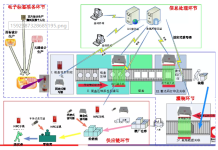
A comprehensive RFID traceability system spans the entire supply chain. The architecture typically includes the following components:
1. Tag Encoding and Encryption
At the point of manufacture, each RFID tag is encoded with a unique product ID, production batch, and date. This data is encrypted using industry-standard algorithms, ensuring that even if the tag is read, the information cannot be altered or counterfeited.
2. Production Line Integration
RFID readers are installed at key points on the bottling line—filling, capping, labeling, and packaging. As each bottle passes through these checkpoints, its tag is automatically read and logged. This creates an immutable record of production.
3. Warehouse and Logistics Management
Throughout warehousing and distribution, handheld or fixed RFID readers scan pallets and cases. This provides real-time visibility into inventory levels, reduces manual labor, and prevents theft or diversion. The system supports both FDX (Full Duplex) and HDX (Half Duplex) communication protocols, which is an important consideration when selecting tags for different environments. For applications requiring high-speed reading in dense pallet environments, understanding the difference between HDX vs FDX tags is critical for system performance.
4. Consumer Engagement and Verification
The final link in the chain is the consumer. Using a standard smartphone app, a consumer can tap the bottle’s RFID tag to retrieve its full history: production date, bottling location, distribution route, and previous authentication attempts. This transparency builds trust and allows brands to engage directly with their customers.
Real-World Deployment: A Case Study with Wuliangye
One of the most successful large-scale deployments of RFID alcohol anti-counterfeiting is the partnership between Kunrui Electronics and Wuliangye Group. Beginning in 2009, this collaboration set a new benchmark for the industry.
Wuliangye faced rampant counterfeiting of its premium baijiu. Previous anti-counterfeiting measures, including bottle codes and box codes, were easily replicated. Kunrui’s solution introduced a third layer: a unique RFID code, creating a three-in-one identification system. This was the first domestic application of RFID technology to alcohol anti-counterfeiting and traceability in China.
Deployment Scale and Results
Over 11 years of stable operation, more than 400 million bottles of Wuliangye were tagged with RFID labels. The system delivered measurable results:
- Zero successful counterfeits on tagged products
- 100% supply chain visibility from production to retail
- Consumer adoption: millions of verifications via mobile app
Kunrui developed four generations of label products for Wuliangye, evolving from standard tags to advanced “fragile” labels that physically break upon removal, preventing tag recycling. This iterative improvement demonstrates the importance of tailoring the RFID tag design to the specific application—a critical consideration for any alcohol brand planning a similar deployment.
Product Selection Guidance for RFID Alcohol Tags
Choosing the right RFID tag for alcohol anti-counterfeiting involves balancing security, durability, cost, and read range requirements. Here are the key factors to evaluate:
Tag Type and Frequency
Most alcohol anti-counterfeiting applications use HF (13.56 MHz) or UHF (860-960 MHz) tags. HF tags, such as those based on the NXP NTAG series, are ideal for consumer-facing NFC verification because any smartphone can read them. When selecting between popular chip types, understanding the differences is essential. For example, a detailed comparison of NTAG213 vs NTAG215 reveals that while both are suitable for authentication, the NTAG215 offers larger memory, which can store more product information and enabling richer consumer interactions.
Tamper-Evident Features
For high-value spirits, a tamper-evident or fragile tag is non-negotiable. These tags are designed with a frangible antenna that breaks when someone attempts to peel the label off the bottle. Once broken, the tag cannot be read, immediately signaling tampering.
Environmental Durability
Alcohol storage and transport can expose tags to temperature extremes, humidity, and condensation. Tags must be laminated or encapsulated to protect the chip and antenna. Look for tags with an IP rating suited to the expected environmental conditions.
Read Range and Integration
If the system is used for warehouse automation (e.g., reading cases on a pallet), UHF tags with longer read ranges are preferred. For consumer-facing verification, HF/NFC tags with a read range of a few centimeters are sufficient and more secure against accidental reads.
Deployment Considerations for RFID Anti-Counterfeiting Systems
Implementing an RFID traceability system at scale requires careful planning. Based on industry best practices and the Wuliangye experience, here are the critical deployment considerations:
1. Tag Attachment and Labeling Process
Tag placement must be standardized to ensure consistent reading. For glass bottles, the tag should be placed on a flat surface (e.g., the back label area) and should not be obstructed by metal foil or liquid inside the bottle. The adhesive must be strong enough to survive transport but compatible with the bottle surface.
2. Data Integration and Backend Systems
The RFID system must integrate with existing ERP (Enterprise Resource Planning) and WMS (Warehouse Management Systems). Each scan event must be captured and processed in real time to enable true traceability. A cloud-based platform with API integration is recommended for scalability.
3. Consumer Education and App Development
A successful deployment includes a user-friendly mobile application that consumers can use to verify products. The app should provide clear results (authentic/suspicious), product details, and optionally, promotional content or loyalty rewards to drive adoption.
4. Cost Analysis and ROI
The cost per RFID tag has decreased significantly over the past decade, but for high-volume deployments, every cent matters. For premium spirits, the cost of a single tag is negligible compared to the brand value it protects. ROI should be calculated based on:
- Reduction in counterfeit-related revenue loss
- Improved supply chain efficiency (reduced manual checks)
- Enhanced brand trust and consumer loyalty
5. Testing and Pilot Runs
Before full-scale deployment, conduct a pilot in a controlled environment—one production line or one distribution region—to validate reading accuracy, tag durability, and system integration. Measure the read rate under real-world conditions (high speed, varied lighting, different bottle orientations).
Industry Insights and Future Trends
The adoption of RFID anti-counterfeiting in the alcohol industry is accelerating. Beyond authentication, brands are leveraging RFID data for consumer engagement, demand forecasting, and gray market detection. Future trends include:
- Blockchain Integration: Recording RFID scan events on a blockchain creates an immutable, publicly verifiable ledger of a product’s journey.
- AI-Powered Analytics: Machine learning algorithms can analyze scan patterns to detect anomalies and predict counterfeit hotspots.
- Sustainable Tags: Eco-friendly RFID tags made from recycled or biodegradable materials are being developed to meet sustainability goals.
The technology is also expanding beyond premium spirits to mid-range products, as the cost of tags continues to fall. For brands considering entry, the key is to start with a clear security objective and partner with an experienced RFID manufacturer that can customize both the hardware and the software solution.
Frequently Asked Questions (FAQ)
- Can RFID tags be removed and reattached to counterfeit bottles?
Modern tamper-evident RFID tags are designed with fragile antennas that break upon removal, making reattachment impossible. Some tags also feature “kill switches” that permanently deactivate the chip if tampering is detected. - What is the read range of NFC vs UHF RFID tags for alcohol bottles?
NFC (HF) tags typically have a read range of 1-4 cm, ideal for consumer smartphone verification. UHF tags can be read from 2-10 meters, depending on the environment and antenna design, making them suitable for warehouse automation. - How much data can an RFID tag store on a bottle of wine?
It depends on the chip. The NTAG213 stores 144 bytes of user memory, while the NTAG215 stores 504 bytes. For most anti-counterfeiting applications, 144 bytes is sufficient for a unique ID and encrypted product data. - Are RFID tags safe for alcoholic beverages?
Yes. RFID tags are passive (no internal battery) and made from materials that are safe for indirect food contact. The tags are typically applied to the bottle exterior and do not come into contact with the liquid. - Can consumers verify RFID-tagged alcohol without an internet connection?
Some systems allow offline verification by reading a digitally signed certificate stored on the tag. However, full traceability—including the product’s supply chain history—requires an internet connection to query the database. - How do I choose between NTAG213 and NTAG215 for my wine labels?
If you only need basic authentication with a simple “genuine/fake” result, the NTAG213 is cost-effective. If you want to store additional product information, batch details, or marketing content, the NTAG215 offers more memory. For a detailed breakdown, see our comparison of NTAG215 vs NTAG213. - Is RFID anti-counterfeiting suitable for all types of alcohol, including beer and spirits?
Yes. The technology is media-independent and can be applied to glass, plastic, and metal containers. For metal cans or foil-covered bottles, use tags with ferrite shielding to prevent signal interference. - What is the typical lifespan of an RFID tag on a wine bottle?
Passive RFID tags have no battery and can last indefinitely if the antenna and chip are intact. However, exposure to extreme conditions (e.g., direct sunlight, high heat) can degrade the materials over years. Most tags are rated for a 10+ year lifespan.
Conclusion
RFID anti-counterfeiting traceability solutions represent a paradigm shift in how the alcohol industry protects its products and consumers. By providing each bottle with a unique, encrypted, and verifiable digital identity, manufacturers can eliminate counterfeit goods, optimize their supply chains, and build lasting consumer trust. The success of the Wuliangye deployment—over 400 million bottles tracked over 11 years—demonstrates that this technology is not just a concept but a proven, scalable solution. For any alcohol brand facing the growing threat of counterfeiting, the “golden eye” of RFID technology offers a clear path forward.