
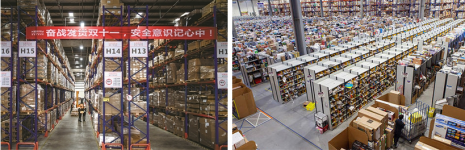
“Double 11” shopping festival is approaching, RFID helps warehouse logistics + supply chain improve management efficiency
 chrispeng
 “`html
RFID in Warehouse Logistics and Supply Chain: Preparing for Peak Season Performance
The annual Double 11 shopping festival represents the most demanding logistics challenge of the year for e-commerce platforms, warehouse operators, and supply chain managers. With sales events now spanning weeks rather than days, the pressure on fulfillment infrastructure has reached unprecedented levels. Millions of merchants stock inventory into festival warehouses, and the express delivery industry prepares for volumes that exceed normal daily throughput by several multiples.
In this high-stakes environment, RFID technology has moved from being an optional efficiency tool to a core operational requirement. By enabling automated identification, real-time data capture, and seamless integration with warehouse management systems, RFID provides the visibility and speed that peak season logistics demands. This article examines how RFID reader manufacturers and tag suppliers are helping logistics operators transform their capabilities to meet the Double 11 challenge.
The Scale Challenge of Double 11 Logistics
During the Double 11 period, traditional manual and barcode-based logistics processes simply cannot keep pace. Warehouses that normally process tens of thousands of orders per day must suddenly handle hundreds of thousands. The consequences of system failure are severe: delayed shipments, misdirected parcels, inventory inaccuracies, and lost revenue.
RFID technology addresses these pain points by replacing line-of-sight scanning with bulk, non-contact identification. A single RFID reader can capture hundreds of tags per second, eliminating the bottleneck of manual scanning at every checkpoint. For warehouse operators facing the Double 11 surge, this speed differential is the difference between meeting service level agreements and disappointing customers.
How RFID Transforms Warehouse Logistics Operations
Warehousing and Distribution Automation
The implementation of RFID in warehouse logistics begins at the facility entry and exit points. When RFID tags are affixed to pallets, cases, or individual items, fixed readers at dock doors automatically capture incoming and outgoing shipments without requiring personnel to stop and scan each unit. This creates a continuous data stream that feeds directly into the warehouse management system.
Key operational improvements include:
- Automated receiving: When tagged pallets enter the warehouse, the system instantly verifies quantities against purchase orders and updates inventory records. Discrepancies trigger immediate alerts, preventing errors from propagating through the supply chain.
- Intelligent put-away: The system directs forklift operators to optimal storage locations based on real-time inventory data, reducing travel time and maximizing warehouse capacity utilization.
- Error-proof picking: Handheld RFID readers verify each picked item against the order in real time, eliminating mis-picks and reducing the need for post-picking quality checks.
- Automated shipping verification: As pallets exit the facility, readers confirm that the correct items and quantities are being shipped, with automatic alerts for any discrepancies.
Forklift and pallet tracking represents another high-value RFID application. By attaching ruggedized RFID tags to material handling equipment, warehouse operators gain real-time visibility into asset location and utilization. This reduces time spent searching for equipment, improves fleet scheduling, and provides data for preventive maintenance planning.
Real-Time Cargo and Vehicle Tracking
Visibility extends beyond warehouse walls when RFID is deployed across the transportation network. Trucks equipped with RFID tags on windshields, cargo doors, and individual shipments are automatically identified as they pass through reader-equipped checkpoints at distribution centers, cross-dock facilities, and destination warehouses.
This architecture enables several critical tracking functions:
- Gate automation: Vehicles entering or leaving the facility are identified automatically, with the system recording arrival and departure times, verifying scheduled appointments, and updating shipment status.
- Route compliance monitoring: By deploying readers at strategic points along delivery routes, logistics managers can verify that vehicles follow planned itineraries and identify delays before they impact customer commitments.
- Chain-of-custody documentation: Each time a tagged shipment passes a reader checkpoint, an immutable timestamp is created, providing auditable proof of custody throughout the logistics chain.
The combination of fixed infrastructure and mobile handheld readers creates a comprehensive tracking mesh that gives supply chain managers the visibility they need to make informed decisions during peak periods.
Express Parcel Sortation Accuracy
For express delivery operations, sortation accuracy is paramount. A single misdirected parcel can cascade into multiple failed deliveries and customer complaints. RFID channel readers installed on conveyor systems provide a solution that far exceeds the read reliability of barcode scanners.
In a typical deployment, each parcel receives an RFID tag that is encoded with destination information. As parcels travel through the sortation system, they pass through RFID channel antennas that read every tag with near-100% accuracy, even when packages are stacked, overlapping, or moving at high speed. The system automatically diverts each parcel to the correct chute, lane, or outbound container. If a tag read fails or indicates the wrong destination, an immediate alarm alerts operators to intervene.
This technology is particularly valuable during peak periods when temporary sortation workers may be less experienced with manual processes. RFID reduces reliance on human judgment for sortation decisions, maintaining accuracy even when staffing levels are stretched thin.
RFID in Supply Chain Management: Creating Transparency from Source to Customer
Beyond the warehouse, RFID is transforming supply chain management by enabling end-to-end visibility that was previously unattainable with barcode systems. The modern supply chain spans multiple tiers of suppliers, contract manufacturers, distribution centers, and retail partners. Information asymmetry across these nodes creates friction costs, inventory inefficiencies, and quality risks.
Inventory Cost Reduction Through Real-Time Visibility
Traditional periodic inventory counting methods leave significant gaps between physical stock positions and system records. These gaps force companies to carry safety stock buffers that tie up working capital. RFID-enabled continuous inventory visibility eliminates this problem by providing accurate, real-time stock data across all locations.
The financial impact is substantial. Companies implementing RFID in supply chain operations typically report inventory accuracy improvements from the 85% range to 99% or higher. This allows them to reduce safety stock levels by 30-50% while simultaneously improving order fulfillment rates.
Labor Productivity Gains Across the Supply Chain
Labor represents the largest operational cost in most logistics and supply chain operations. RFID reduces labor requirements by automating data capture tasks that previously required manual scanning or data entry. A single RFID read replaces multiple barcode scans, and the elimination of paperwork-related administrative tasks frees personnel to focus on value-adding activities.
For example, a typical warehouse receiving process using barcodes might require 20-30 minutes per truck for manual counting and verification. With RFID and tagged pallets, the same process takes under one minute. Over the course of a peak season like Double 11, these time savings translate into significant reductions in overtime costs and temporary staffing requirements.
Transaction Cost Reduction Through Data Automation
Supply chain transactions generate enormous amounts of paperwork: purchase orders, advance shipping notices, packing lists, bills of lading, receipt confirmations, and invoices. Manual processing of these documents creates errors, delays, and reconciliation costs.
RFID enables a paper-light supply chain where electronic data replaces physical documents. When goods arrive at a distribution center with RFID tags, the system automatically generates receipt records, updates inventory, triggers payment approval, and sends confirmation to the supplier. This end-to-end automation reduces transaction processing costs while improving data accuracy.
Brand Protection Through Enhanced Traceability
Counterfeit products and unauthorized diversion represent growing risks for brand owners in industries ranging from apparel to electronics to pharmaceuticals. RFID provides the foundation for robust traceability systems that protect brand reputation and revenue.
By encoding each product or case with a unique identifier that is tracked throughout the supply chain, companies can verify authenticity at any point in the distribution network. If a product with a specific identifier appears in an unauthorized channel or geographic market, the system alerts brand protection teams to investigate. This capability is especially valuable during peak seasons when counterfeiters are most active.
For products that pass through complex multi-tier supply chains, RFID traceability provides proof of origin for raw materials, manufacturing batch records, storage conditions, and handling history. This transparency helps companies comply with regulatory requirements and respond to consumer demand for ethical sourcing information.
Deployment Considerations for Peak Season RFID Systems
Implementing RFID for peak season logistics requires careful planning to ensure system reliability under maximum load conditions. Key deployment considerations include:
Tag Selection and Application Strategy
The choice of RFID tag depends on the material composition of the products being tracked, the read range required, and the environmental conditions of the application. For apparel and soft goods, specialized RFID tags on clothes are designed to survive laundry processes and maintain performance after folding or compression. For pallet-level tracking, ruggedized tags with extended read range provide reliable performance in high-interference warehouse environments.
Application method is equally important. Tags can be applied at source during manufacturing, at the distribution center during receiving, or at the retail store during marking. The optimal approach balances cost, efficiency, and the need to capture data at the earliest possible point in the supply chain.
Reader Infrastructure Design
Fixed reader placement must account for the physical layout of the facility, the material handling equipment in use, and the specific workflows being automated. Portal readers at dock doors require careful antenna positioning to create a consistent read zone that captures all tags on passing pallets without cross-reads from adjacent zones. Conveyor-based applications require tunnel readers that provide controlled, repeatable read conditions.
Handheld readers provide flexibility for applications where fixed infrastructure is not practical. Warehouse personnel use handhelds for cycle counting, pick verification, and spot checks. The selection of RFID readers should consider ergonomics, battery life, read performance, and integration with existing mobile computing platforms.
System Integration and Data Management
RFID generates data volumes that exceed traditional barcode systems by orders of magnitude. The infrastructure to capture, process, and act on this data must be designed for the throughput requirements of peak seasons. Middleware software filters and aggregates raw tag reads, passing meaningful events to warehouse management systems, enterprise resource planning systems, and analytics platforms.
Integration testing should simulate peak season volumes to verify that all components perform under maximum load. This testing should include worst-case scenarios such as dense tag populations, high conveyor speeds, and simultaneous reads at multiple portal locations.
Product Selection Guidance for Logistics RFID Deployments
Selecting the right RFID products for a logistics application requires matching technology capabilities to operational requirements. Key selection criteria include:
- Read range requirements: Portal applications at dock doors typically require 4-6 meters of read range, while conveyor tunnel applications need controlled read zones of 1-2 meters. Handheld applications require 2-3 meters of range for convenient scanning.
- Tag memory requirements: Simple identification applications can use tags with minimal memory (96-128 bits), while applications requiring detailed product information or serialized tracking benefit from tags with 512 bits or more of user memory.
- Environmental durability: Tags deployed in cold chain applications must withstand freezing temperatures, while tags used in industrial warehouses must resist dust, moisture, and physical impact. For applications requiring comparison of tag options, understanding NTAG213 vs NTAG215 characteristics helps in choosing the right NFC tag for specific use cases.
- Reader compatibility: Tags and readers should be tested together to verify interoperability and optimal performance. Gen2 standards ensure basic compatibility, but real-world performance varies with antenna design, chip sensitivity, and environmental factors.
- Scalability: Choose solutions that can be expanded from pilot installations to full facility deployment without requiring replacement of core infrastructure.
Industry Insights: RFID Maturity Across Logistics Segments
The adoption of RFID in logistics varies significantly by segment and geography. Retail apparel leads in tag volume, with major brands and retailers requiring RFID tagging at source for all products. These organizations have achieved inventory accuracy rates above 99% and reduced out-of-stock situations by 50% or more.
Third-party logistics providers are increasingly investing in RFID as a competitive differentiator. By offering RFID-enabled warehousing and distribution services, 3PLs can command premium pricing while delivering superior accuracy and efficiency to their clients.
The pharmaceutical and healthcare logistics segment is driven by regulatory requirements for serialization and track-and-trace. RFID complements barcode serialization by providing faster, more automated verification at each point in the distribution chain.
Cross-border e-commerce logistics represents a growing opportunity for RFID. As international parcel volumes increase, the need for accurate sortation, efficient customs clearance, and reliable last-mile delivery creates a strong business case for RFID investment.
Frequently Asked Questions About RFID in Logistics and Supply Chain
Q1: What is the typical return on investment for RFID in warehouse logistics?
ROI varies by application, but most warehouse RFID deployments achieve payback within 12-18 months. Benefits include labor savings of 20-40% in receiving, put-away, and shipping processes; inventory accuracy improvement from 85% to 99%+, reducing safety stock requirements; and elimination of shipping errors that cause customer penalties and re-shipment costs.
Q2: Can RFID work with existing barcode-based systems?
Yes. RFID can be implemented alongside barcode systems, with RFID providing the primary data capture method and barcodes serving as a backup or for items not yet tagged. Many organizations transition gradually, starting with RFID for high-value items or high-volume lanes while maintaining barcode processes for the rest of their operations.
Q3: How does RFID perform in high-density tag environments?
Modern Gen2 RFID systems can read hundreds of tags simultaneously in a single read zone. Performance depends on reader power, antenna configuration, and tag density. Properly designed systems achieve 99%+ read rates even with pallets containing 100+ tagged items. Anti-collision algorithms in readers and chips ensure that all tags are read, though dense environments may require slightly longer read cycles.
Q4: What are the main challenges in implementing RFID for logistics?
The primary challenges are tag cost for low-value items, integration with legacy IT systems, and achieving consistent read performance across diverse product materials. Metal, liquid, and dense products require specialized tag designs. Integration complexity varies with the age and architecture of existing warehouse management systems.
Q5: How should companies prepare for RFID deployment during peak seasons?
Best practice is to implement RFID during off-peak periods, allowing time for system tuning, staff training, and process adjustment. A phased approach that starts with one process area (such as receiving) and expands to other areas builds organizational confidence and demonstrates ROI before full deployment. Pilot testing should include peak season volume scenarios to verify system capacity.
Q6: What is the lifespan of RFID tags used in logistics applications?
Passive UHF RFID tags used in logistics typically have an operational lifespan of 5-10 years, limited primarily by physical wear and environmental exposure rather than electronic degradation. Tags attached to reusable assets like pallets and totes may last longer if protected from physical damage. Single-use tags applied to products for retail or logistics tracking only need to function for the duration of the supply chain journey, which is typically weeks or months.
Q7: Can RFID improve sustainability in logistics operations?
RFID contributes to sustainability by reducing waste throughout the supply chain. Accurate inventory data minimizes overproduction and markdown of products. Reduced shipping errors mean fewer return shipments and less fuel consumption. Automated processes reduce paper usage for documentation. And better asset tracking extends the useful life of reusable containers, pallets, and equipment.
Q8: What are the future trends for RFID in logistics and supply chain?
The industry is moving toward broader adoption of RAIN RFID (UHF) for supply chain applications, driven by declining tag costs and increasing tag read range and sensitivity. Integration with IoT sensors for temperature, humidity, and shock monitoring is growing, particularly in cold chain and pharmaceutical logistics. Artificial intelligence and machine learning are being applied to RFID data to predict demand, optimize inventory placement, and detect anomalies in logistics flows.
Conclusion: RFID as a Peak Season Performance Enabler
The Double 11 shopping festival represents a stress test for logistics and supply chain operations worldwide. Companies that have invested in RFID technology enter peak season with a significant operational advantage: the ability to process higher volumes with greater accuracy, lower labor costs, and real-time visibility across their entire fulfillment network.
From automated receiving and put-away to error-proof picking and shipping verification, RFID streamlines every step of the warehouse logistics process. In the supply chain, RFID provides the transparency that enables inventory optimization, cost reduction, brand protection, and traceability. As the technology continues to mature and costs decrease, RFID is becoming an essential component of modern logistics infrastructure.
For logistics operators preparing for the next peak season, the question is no longer whether to adopt RFID, but how quickly they can deploy it to gain competitive advantage. The experience of companies that have already implemented RFID demonstrates that the technology delivers measurable, repeatable improvements in efficiency, accuracy, and customer satisfaction—benefits that extend far beyond the peak season and into everyday operations.
“`