
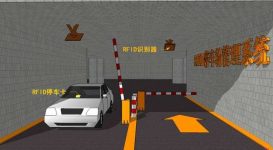
RFID technology allows parking lots to build intelligent platform management and control
 chrispeng
 Introduction to RFID-Driven Smart Parking Platforms
The modern parking lot faces immense pressure from the increasing number of vehicles. Traditional management methods, which rely on manual ticketing or proximity cards, often lead to bottlenecks, human error, and inefficient space utilization. RFID technology offers a transformative solution, enabling a smart parking platform that facilitates non-stop vehicle identification and automated access control. This shift from manual to automated management significantly enhances vehicle dispatch efficiency and improves the overall experience for both operators and drivers.
Building an Intelligent Parking Management System with RFID
An intelligent parking management system leverages the power of RFID readers and electronic tags to create a seamless entry and exit process. Unlike barcode or magnetic stripe systems, RFID does not require a direct line of sight. The system architecture typically integrates image digital processing and automatic control logic to handle complex parking scenarios.
Technical Components of the RFID Parking Solution
The core components of a modern RFID parking system include:
- UHF RFID Windshield Tags: Each vehicle is equipped with a unique, read-only or read-write RFID tag affixed to the windshield. These tags store a unique identifier linked to the vehicle’s license plate and owner’s information in the central database.
- UHF RFID Readers and Antennas: Installed at entry and exit points, these readers continuously transmit radio waves. When a vehicle approaches, they automatically interrogate the passive UHF RFID tag, reading its data without requiring the driver to stop or roll down a window.
- Centralized Management Software: This software processes the data from the readers. It matches the tag ID against a database, calculates parking duration, manages billing, and controls the barrier gates.
How the RFID System Works in a Parking Lot
- Vehicle Arrival: As a vehicle approaches the entrance, the UHF RFID reader detects the windshield tag from a distance of several meters.
- Data Capture and Verification: The reader sends the unique ID from the tag to the computer server. The management software cross-references this ID with the pre-registered vehicle information in its database.
- Automated Decision: If the data matches (e.g., a registered monthly subscriber), the software sends a ‘Pass’ command. The barrier gate opens automatically, and the system logs the entry time.
- Anomaly Handling: If the tag is lost, damaged, or the vehicle is unknown, the system prompts the guard for manual verification. This manual override is a critical fallback, ensuring continuity of service even during system failures.
Critical Advantages of RFID Over Traditional Systems
When comparing an RFID-based parking system to traditional methods, several technical and operational benefits emerge:
Enhanced Speed and Throughput
The most immediate benefit is the ability to read passive UHF tags from a long range without requiring contact. This “non-stop” capability reduces the time a vehicle spends at a barrier from several seconds to under one second, drastically reducing queue lengths during peak hours.
Superior Security and Data Integrity
UHF tags offer high security and anti-counterfeiting capabilities. Each tag has a globally unique TID (Tag Identifier) that cannot be duplicated easily. The system eliminates manual errors in counting and billing, ensuring that revenue is accurately tracked and that vehicle owner rights are protected.
Low Maintenance and High Reliability
A properly deployed RFID system requires less physical maintenance than mechanical ticket dispensers or magnetic card readers. The solid-state nature of the readers and the robustness of the tags (particularly when protected by a windshield) lead to lower long-term maintenance costs. The system also provides data backup and recovery capabilities to prevent data loss.
Real-World Applications and Deployment Considerations
RFID vehicle identification technology has been successfully deployed in a wide range of environments, including corporate depots, train stations, airport parking garages, and residential communities. A key consideration for deployment is the selection of the appropriate hardware.
Product Selection Guidance
For a parking application, choosing the correct RFID tag is crucial. You need a tag designed for windshield mounting that can withstand UV exposure and temperature fluctuations. The RFID reader manufacturer should provide units with adjustable read range and sensitivity to ensure reliable reads without cross-talk between adjacent lanes.
Industry Insights and Future Trends
The lessons learned from retail and logistics—where RFID tags on clothes or pallets are used for inventory tracking—are now being applied to urban vehicle management. The shift toward fully automated data collection not only prevents operational loopholes but also supports smart city initiatives by providing valuable data for traffic flow analysis. As UHF technology becomes more cost-effective, the integration of parking systems with broader IoT platforms is becoming standard.
Frequently Asked Questions (FAQ)
How durable is the windshield RFID tag?
Passive UHF tags designed for outdoor use are generally weather-resistant and can withstand exposure to sunlight, rain, and temperature extremes for many years. Their location behind the windshield provides additional protection.
What happens if my RFID tag is lost or damaged?
A lost tag can be deactivated in the system database immediately, preventing misuse. A replacement tag can be issued quickly and programmed with the same vehicle information, ensuring continuity of access.
Can the system work in harsh weather like heavy rain or snow?
Yes. Unlike optical systems (such as cameras), RFID uses radio waves, which are much less susceptible to interference from adverse weather conditions. This ensures reliable operation in almost any environment.
What is the difference between UHF and LF/HF for parking?
UHF (Ultra-High Frequency) is generally preferred for parking due to its longer read range (typically 3-10 meters). LF (Low Frequency) and HF (High Frequency) have much shorter ranges, which would require drivers to stop very close to the reader, negating the “non-stop” benefit.
How does the system handle visitor access?
Visitors can be issued a temporary UHF tag at a kiosk or use an alternative method like entering a license plate number. The system can manage multiple tag types and link them to different access permissions and billing rates.
Is it possible to integrate RFID with license plate recognition?
Yes. Many modern systems combine RFID (for identification) with Optical Character Recognition (for verification). This dual-authentication approach provides an even higher level of security and data accuracy.
How do I choose between different RFID tag frequencies?
For standard vehicle access control, UHF (860-960 MHz) is the industry standard due to its optimal balance of read range and data transfer speed. The choice of a specific UHF tag (e.g., NTAG213 vs NTAG215) is more relevant for NFC payment applications rather than long-range vehicle identification.
What are the power requirements for the RFID readers?
Most commercial UHF readers require a standard power supply (e.g., 12V or 24V DC or PoE). It is standard practice to install a backup power source (UPS) for the readers and server to ensure the parking lot remains operational during a power outage.